Let me ask you something uncomfortable: If you could erase the worst mistake of your past, but the only way to do it was to make a deal with someone who viewed you as a mere chess piece—would you take it?
This is the brutal, burning question at the heart of Payback (2026), a brand-new, 10-episode Thai drama that is currently simmering on the radar of international viewers who crave something darker and more substantive than your average romance. On the surface, it looks like a classic “broken boy enters the ruthless showbiz world” story. But peel back that glossy layer, and you find a psychologically tense, morally gray, and unbearably poignant exploration of trauma, control, and the terrifying hope of redemption.
Payback 2026 Official Trailer | PAYBACK THE SERIES
Let’s talk about the two men at the center of this storm: Sun, the grieving deliveryman, and Jay, the calculating director. We need to break down why Payback is so much more than a revenge thriller, and why their twisted relationship might just haunt you for days after the credits roll.
The Fractured Soul of Sun: A Deliveryman Carrying a Cemetery
Our protagonist, Sun, is a 25-year-old deliveryman who is, quite frankly, surviving on fumes. The synopsis tells us that violence took his brother and his mother. But let’s sit with that reality for a second.
More Than Just a “Troubled Past”
The writers of Payback didn’t give Sun a “tragic backstory” just to make him sympathetic. They gave him a crushing, inescapable anchor. Survivor’s guilt isn’t just a word here; it dictates his every physical movement. You can see it in his hunched shoulders. You can see it in the way he avoids eye contact with people. He feels the phantom presence of his lost family everywhere he goes.
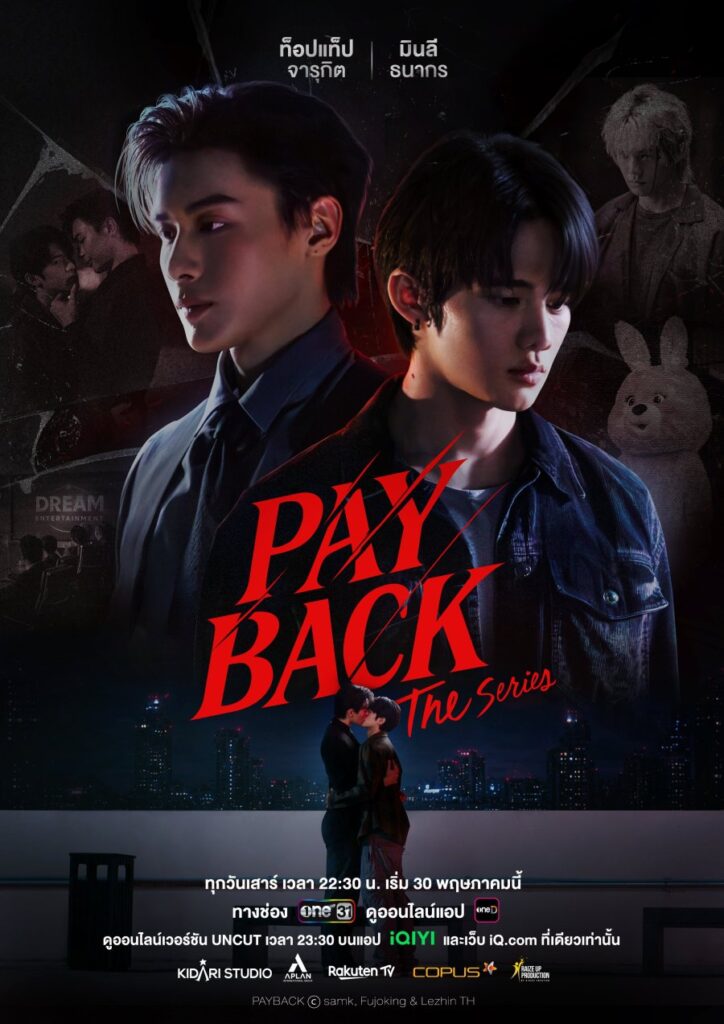
When Sun decides to enter Dream Entertainment, it isn’t because he wants to be a star. It isn’t about fame or money. It is about control. He feels like the universe stole his family away while he was powerless to stop it. By stepping into the shark tank of the entertainment industry, he is forcing himself into a position where he must be sharp, calculating, and dangerous. He is trying to rewrite his identity from “victim” to “survivor.”
The Motivation: Is it Redemption or Revenge?
Here is where the show earns its emotional complexity. Sun wants justice for his mother and brother, yes. But does he actually want to heal? That is the terrifying gray area.
Throughout the early episodes, we see Sun wage a war against himself. A part of him is driven purely by revenge—he wants to see the people responsible bleed. Another, much smaller part of him, is just a lonely kid who desperately wants to be held. This internal conflict is written so flawlessly because it is utterly realistic. When you are drowning in grief, you don’t have a neat 5-step plan to recovery. You lash out. You make bad deals. And that is precisely what Sun does when he meets Jay.
Jay: The Strategist with the Hollow Chest
Now, let’s talk about the second lead, Jay. And I need to be clear: Jay is not a conventional romantic hero. He is cold. He is calculating. And he is the most intimidating presence in any room he walks into.
The “Transaction” Philosophy
As the director of Dream Entertainment, Jay exists in a world of power plays. But his worldview runs deeper than business savvy. Jay views human relationships as transactions. You give me something of value; I give you something in return. Emotional attachment is a weakness. Vulnerability is a liability.
Why? Because beneath his perfectly tailored suits and his paralyzing charisma lies a deep, unhealed wound. Payback doesn’t spoon-feed us Jay’s trauma in the first episode. Instead, it shows us the effects of his trauma. He recoils from genuine touch. He flinches when Sun looks at him too deeply. He has built an impenetrable fortress around his heart, and he believes he is safe in there.
The Unraveling of Control
The magic of Payback lies in watching Jay slowly lose his grip on his own game. He takes Sun under his wing—or rather, he sponsors him—because he sees Sun’s raw anger as a tool he can wield for corporate warfare. He thinks Sun is a weapon he can point at his enemies.
But the catch is that Sun isn’t a mindless blade. Sun is a hurricane of raw human emotion. And when a hurricane hits a fortress, the walls eventually crumble. Jay begins to forget the transaction. He begins to care about Sun’s safety outside of the business plan. That shift terrifies him more than any rival executive ever could. Watching this glacial man slowly thaw is a masterclass in acting and subtle writing.
The Devil’s Bargain: When a Sponsor Becomes a Puppeteer
The power dynamic in Payback is unnervingly tense, and it is the primary engine of the drama. When Jay steps in as Sun’s sponsor, the contract is clear: Jay provides the money and the connections; Sun provides the pawn for Jay’s chessboard.
The Power Dynamic of the “Sponsorship”
This isn’t a benevolent mentorship. It is an ownership agreement. Jay dictates Sun’s moves, his public image, and his career trajectory. There is a profoundly uncomfortable “transactional” subtext here. It forces the audience to ask: Is Jay a savior, or is he just a better-dressed predator?
The show brilliantly refuses to answer this question for a long time. Because the truth is, Jay is both. He is pulling Sun out of a pit of despair while simultaneously keeping Sun in a gilded cage. This duality makes the romance incredibly risky. When Sun eventually starts to fall for Jay, it is tainted by the reality that Jay holds the pen to his entire future.
The Shift from Transaction to Dependency
However, as the 10 episodes unfold, the ledger of their relationship starts to bleed into disarray. Jay stops viewing Sun as an asset. He starts viewing Sun as a necessity. You can pinpoint the exact scene where Jay’s cold eye flickers with genuine fear—not fear of corporate rivals, but fear of losing Sun.
When that switch flips, the power dynamic becomes volatile. Sun, who initially felt powerless, suddenly realizes he has a stranglehold on the one person who claims to be in total control. It is a mesmerizing, toxic, and addictive circle of dependency that keeps you glued to the screen.
The Showbiz Pressure Cooker: More Than Just a Backdrop
We cannot ignore the setting of Payback. The Thai entertainment industry here is not just a glamorous background; it is a living, breathing monster that constantly threatens to consume our characters.
Cutthroat Competition and Corporate Sabotage
Director Woodie Pongchaiphat Sethanand does something brilliant with this setting. He strips away the glitter of red carpets and fan meetings. Instead, he forces us into dimly lit boardrooms, backstage dressing rooms filled with anxiety, and PR emergency meetings. The competition in Dream Entertainment is fierce. Everyone is stabbing everyone else in the back for a prime-time slot.
Sun’s entrance into this world is like throwing a raw piece of meat into a piranha tank. The secondary cast is not just “there” for filler; every rival actor and manager poses a tangible threat to Sun’s survival. This high-stakes pressure amplifies the tension between Jay and Sun. There is never a moment to breathe; the corporate war is constantly knocking on their door.
The “Mask” of Fame
Furthermore, the show engages with the theme of performance. In the entertainment world, you cannot show your true self. You must put on a mask.
For Sun, who is already drowning in grief, being forced to perform joy, charisma, and confidence for the cameras is an extra layer of psychological torture. But here is the beautiful parallel: Jay has been wearing a mask of cold professionalism his entire life. Watching these two men slowly drop their masks—not for the public, but only for each other—is the emotional payoff of the entire series.
The Romance: A Slow-Burn Built on Ashes
If you are coming into Payback expecting instant hand-holding, rain-kisses, and fluffy confessions, I need to prepare you for a different ride.
The Absence of Instant Gratification
This is a slow-burn romance. And I don’t mean “they get together at episode 8.” I mean they barely touch until the final act. And when they do touch, it isn’t sweet—it is desperate, trembling, and laced with the panic of two people who have never been allowed to be vulnerable.
The show forces us to sit in the discomfort of their connection. Is it romantic if one of them holds all the financial power? Does Sun even want Jay, or is he just grateful to Jay? The series interrogates these questions with incredible maturity. It doesn’t give you a comfortable answer; it gives you a realistic one, which is that love rarely grows in perfect conditions.
The Unspoken Language
Director Woodie Pongchaiphat shines in the unsaid moments. A long stare across a crowded room. Jay’s hand hovering near Sun’s shoulder, but refusing to make contact. The subtle tremble in Sun’s jaw when he realizes Jay has actually listened to him. There is minimal dialogue in their most intimate scenes, but the emotion screaming through the silence is deafening. That is the mark of a truly sophisticated drama.
Why Payback is a Must-Watch (And Who It’s For)
If you are looking for a light, comedic break from reality, Payback is not your show. But if you appreciate drama that is willing to get its hands dirty, this 10-episode journey is an absolute goldmine.
A Warning for the Faint of Heart (Trigger Warnings)
I have to offer an honest, trustworthy trigger warning here. Payback does not hold back. There are graphic, emotionally brutal depictions of violence. The trauma of losing a brother and a mother is not glossed over; it is shown in raw, painful flashbacks. There is a pervasive atmosphere of dread and manipulation. If you are currently in a fragile mental state or dealing with recent grief, you might want to approach this one with caution. It is a heavy, heavy watch.
The 10-Episode Brilliance
Let’s take a moment to appreciate the tight 10-episode format. Western shows often drag out plots to 22 episodes, padding the story with meaningless side quests. Payback delivers exactly 10 hours of concentrated, explosive storytelling. Not a single line of dialogue is wasted. The pacing is relentless, making it the perfect weekend binge-watch. You will feel the tension cut with a knife, and you will find it nearly impossible to hit the “pause” button.
Conclusion: The Cost of Redemption
Ultimately, Payback (2026) leaves you with a lingering, painful question: Can two people who have lost everything truly save each other, or are they just drowning together?
Sun and Jay are not heroes. They are broken, morally compromised, and deeply complicated individuals. But they are human. The show masterfully reminds us that the path to healing is never a straight line. It is a twisted, often ugly road paved with bad decisions and desperate bargains.
If you are ready to have your heart shattered, your nerves frayed, and your mind blown by an unforgettable ending, take the plunge into Dream Entertainment. Just keep a box of tissues nearby—and prepare for Jay’s ice-cold stare to melt your defenses along with Sun’s.
Alright, let’s talk in the comments! Are you a fan of the “transactional, power-imbalance” romance trope? How do you feel about sponsorships in these kinds of dramas—do they make you uncomfortable, or do you find them compelling? Drop your thoughts below; I can’t wait to hear your takes on this incredible series!