Descendants of the Sun (태양의 후예) wasn’t just a television show—it was a national event that became South Korea’s most powerful cultural export since Psy’s “Gangnam Style.” Premiering in February 2016, this military-medical romance achieved what few dramas ever have: simultaneous record-breaking domestic ratings and unprecedented international saturation. Eight years later, as we approach 2026, its popularity persists through streaming revivals, cultural references, and new generations discovering its magic. This analysis explores why a show that concluded years ago continues to captivate audiences worldwide.
The Unprecedented Success Metrics
Records That Still Stand (As of 2026):
- Highest 4th episode rating in Korean cable history (24.1%)
- First Korean drama to achieve simultaneous China-Korea premiere via streaming
- iQIYI (Chinese platform) reached 2 billion views in 3 months
- Average product placement revenue: ₩1 billion (~$740,000) per episode
- Tourism impact: Filming locations saw 500-800% increase in visitors
- “Song-Song Couple” wedding: Most-watched celebrity event globally in 2017
The Perfect Storm of Timing:
- Aired during peak Hallyu (Korean Wave) expansion
- Premiered when streaming platforms were becoming dominant internationally
- Released in post-MERS period when medical heroes were nationally appreciated
- Coincided with military tensions that made soldier narratives resonate
Core Elements of Its Enduring Appeal
1. The Unbeatable “Song-Song Chemistry”
The casting of Song Joong-ki (Captain Yoo Si-jin) and Song Hye-kyo (Dr. Kang Mo-yeon) created a pairing that transcended the screen:
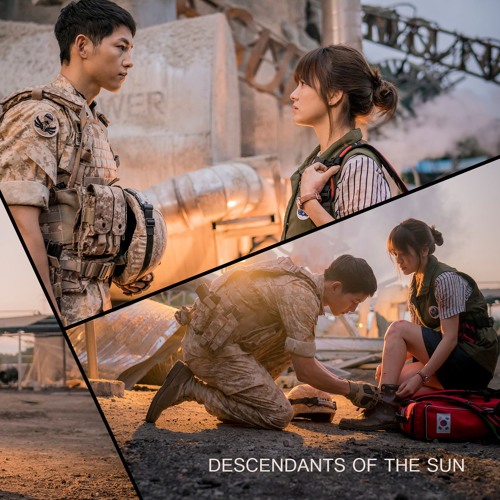
Pre-Existing Star Power:
- Song Joong-ki: Fresh from military discharge, carrying Innocent Man and Sungkyunkwan Scandal fame
- Song Hye-kyo: “Romance Queen” status from Full House, That Winter, The Wind Blows
- Combined, they represented both youthful energy and seasoned elegance
On-Screen Dynamics:
- Balanced power dynamic: Alpha male soldier meets equally strong female surgeon
- Fast-paced romance: No prolonged misunderstandings—confession by episode 4
- Mutual respect: Professional admiration preceding personal feelings
- Real-life extension: Their 2017 wedding and subsequent divorce created a meta-narrative that kept the drama in public consciousness
2. The “Idealized Yet Relatable” Romance Formula
The series perfected a romance blueprint still emulated today:
The Fantasy Elements:
- Location: Fictional war-torn country Uruk (filmed in Greece)
- Professions: Elite Special Forces captain + talented trauma surgeon
- Stakes: Life-and-death situations heightening emotional intensity
- Visuals: Cinematic scenery (Greek beaches, military camps, hospital drama)
The Grounding Elements:
- Work-life balance struggles (dating someone in dangerous professions)
- Ethical dilemmas (military orders vs. medical oaths)
- Class differences (special forces vs. wealthy surgeon)
- Realistic banter (witty dialogue felt natural, not scripted)
3. Secondary Couple Perfection
Seo Dae-young (Jin Goo) and Yoon Myung-ju (Kim Ji-won) provided a contrasting but equally compelling romance:
- Rank-forbidden love: Sergeant Major and Lieutenant
- Class conflict: Poor country boy vs. General’s daughter
- Slow burn vs. main couple’s fast burn
- Tragic elements (infertility storyline) added depth
- Proved the drama’s ensemble strength beyond just the leads
4. The “Noble Professions” Fantasy
In an era of growing career dissatisfaction, the drama sold professional idealism:
- Military: Portrayed as honorable, disciplined, heroic
- Medicine: Shown as sacrificial, skilled, humanitarian
- Combined: Created the ultimate “serving others” fantasy
- Real impact: Medical and military applications actually increased in South Korea post-airing
5. Pacing Revolution
Writer Kim Eun-sook broke conventional K-drama structures:
- Confession in episode 4 (vs. typical episode 8-12)
- First kiss by episode 6
- No amnesia, no birth secrets, no evil mothers
- Time jumps handled maturely (separation then reunion)
- Ending at 16 episodes without unnecessary extension
Cultural & Societal Impact: Beyond Entertainment
Soft Power & National Image
- International perception: Showcased Korea’s disaster response capabilities
- Military portrayal: Improved public perception of South Korean soldiers
- Medical tourism: Increased interest in Korean medical facilities
- Diplomatic tool: Used in cultural exchanges with Greece, China, and Southeast Asia
Economic Impact That Created a Template
Product Placement (PPL) Revolution:
- Natural integration: Subway sandwiches, coffee, cosmetics felt organic
- Revenue model: Proved high-quality dramas could be profitable before airing
- Brand success: Laneige, Canon, Subway reported 300-400% sales increases
- New standard: Every major drama now secures PPL before filming
Tourism Explosion:
- Zakynthos, Greece (fake Uruk): Korean tourists increased 890%
- Taebaek, Korea (military camp): Became pilgrimage site
- Cameo locations: Restaurants, cafes, and shops gained permanent fame
Fashion & Lifestyle Trends (2016-2020)
- “Kang Mo-yeon lipstick” (Laneige Two-Tone Lip Bar) sold out for 18 months
- Military-style jackets and combat boots became mainstream fashion
- “Yoo Si-jin haircut” requested by millions of men globally
- Dried squid snacking (their date food) saw sales surge
Music as Cultural Artifact
The OST album achieved unprecedented success:
- “Always” by Yoon Mi-rae – wedding anthem across Asia
- “This Love” by Davichi – streaming record for drama OST
- “You Are My Everything” by Gummy – karaoke staple
- Every track charted simultaneously—a first for any drama
Why It Still Holds Up in 2026
1. Streaming Algorithm Perpetuity
- Netflix’s “Because You Watched” consistently recommends it to new K-drama viewers
- YouTube reactors continue discovering it, creating new viral moments
- TikTok/Reels edits introduce scenes to Generation Z
- Language learners use it for study (clear dialogue, cultural context)
2. The “Gateway Drama” Status
For international viewers, it often serves as:
- First Korean drama for millions (accessible genres: romance + action)
- Introduction to Hallyu stars (Song Joong-ki’s global fame trajectory)
- Template for expectations (production quality, OST importance, episode structure)
- Safe recommendation (minimal cultural barriers, universal themes)
3. Nostalgia Factor
For those who watched it during 2016-2017:
- Pandemic comfort watch: Many returned to it during COVID-19 lockdowns
- “My first K-drama” emotional attachment
- Pre-BTS global dominance era nostalgia (different Hallyu period)
- Song-Song couple historical interest (like Brangelina for K-drama fans)
4. Academic & Analytical Value
Universities and media programs study it for:
- Cultural diplomacy case study
- Transnational media flow model
- Product placement integration research
- Gender representation analysis (strong female professionals)
5. The “Timeless Production” Quality
Unlike some dated dramas, it avoids:
- Extreme fashion trends that age poorly
- Outdated technology (smartphones already ubiquitous)
- Cringeworthy dialogue (writing remains crisp)
- Low production values (cinematography still impressive)
Comparative Longevity: Why It Outlasted Contemporaries
Vs. Other 2016 Hits:
- Goblin: More philosophically complex but less rewatchable
- Signal: Critically acclaimed but darker, less romantic
- W – Two Worlds: Innovative but convoluted, less emotionally satisfying
The “Replay Factor”:
- Episode independence: Most episodes contain complete mini-arcs
- Satisfying scenes: Iconic moments work as standalone clips
- Humor balance: Comic relief holds up over time
- Emotional peaks: Key scenes retain impact on rewatch
The Criticisms & Why They Didn’t Diminish Popularity
Common Critiques:
- “Unrealistic medicine” (trauma surgery in field conditions)
- “Glossy war portrayal” (aestheticized conflict)
- “Product placement overload” (especially early episodes)
- “Predictable plot” (classic romance structure)
Why They Didn’t Matter:
- Viewers accepted heightened reality as part of the genre
- Emotional truth outweighed factual inaccuracies
- PPL became self-aware and part of the viewing experience
- Execution mattered more than innovation
The Defense:
The drama never pretended to be documentary realism—it was aspirational fantasy with emotional authenticity, which audiences embraced.
The Cast’s Career Trajectories: Post-Drama Success
Song Joong-ki:
- 2016-2017: Global superstar status
- 2019: Arthdal Chronicles (high-budget fantasy)
- 2021: Vincenzo (massive Netflix hit)
- 2022: Reborn Rich (record-breaking ratings)
- 2024-2025: Film projects and continued brand dominance
- Legacy: Remains Korea’s most bankable star, directly traceable to DOTS launch
Song Hye-kyo:
- 2018: Encounter (post-divorce comeback)
- 2022: The Glory (Netflix mega-hit, career renaissance)
- 2024: Film and production company ventures
- Legacy: Proved staying power beyond DOTS, but drama remains career peak popularity-wise
Supporting Cast Elevation:
- Kim Ji-won: Becone lead actress (Fight for My Way, My Liberation Notes)
- Jin Goo: Established as reliable leading man
- Kang Ki-young: Became sought-after supporting actor
- Onew (SHINee): Successful acting transition
The Internationalization Blueprint
China Strategy:
- Simultaneous release on iQIYI (unprecedented at time)
- Weibo integration: Hashtags reached 13 billion impressions
- Celebrity dubbing: Famous Chinese actors voiced main roles
- Cultural adaptation: Military aspects softened for Chinese censors
Southeast Asia Domination:
- Philippines: Highest-rated Korean drama ever on local TV
- Vietnam: Inspired military-medical drama remakes
- Indonesia: Mainstream media obsession for months
- Thailand: Tourism packages specifically for filming locations
Western Inroads:
- Netflix early adoption: Before K-drama was mainstream category
- New York Times coverage: Recognized as cultural phenomenon
- Reaction video catalyst: Thousands of Western YouTubers reacted to it
Where to Watch & Current Viewer Demographics (2026)
Streaming Availability:
- Netflix: Available in 190+ countries (dub/sub options expanded)
- Viki: Still among top 10 most-watched dramas annually
- Local networks: Continues reruns across Asia
- YouTube: Official clips maintain millions of views monthly
2026 Viewer Analysis:
- New K-drama fans: 40% (first or second Korean drama)
- Rewatchers: 35% (nostalgia viewing)
- Academic/critical: 15% (studying phenomenon)
- Language learners: 10% (Korean study material)
Social Media Presence:
- #DescendantsOfTheSun still averages 10,000+ monthly mentions
- TikTok edits regularly go viral (especially Greece scenes)
- “Underrated scenes” discussions continue on Reddit/Korean forums
- Anniversary trends every February (premiere date)
Why New Dramas Haven’t Replaced It
The Unreplicable Factors:
- Pre-streaming era unity: Last drama everyone watched simultaneously on TV
- Song-Song real romance: Authentic off-screen chemistry that became fairy tale then tragedy
- Geopolitical timing: Released during specific Korea-China cultural exchange window
- Writer-director-actor synergy: Kim Eun-sook, Lee Eung-bok, and cast at collective peak
What Later Dramas Learned from It:
- Global release strategy (simultaneous worldwide streaming)
- OST as revenue stream (investing in quality music)
- Location scouting as tourism investment
- Balanced romance (equal professional respect between leads)
The Verdict: A Permanent Landmark
Descendants of the Sun occupies a unique position in Korean entertainment history: too recent to be a “classic” in the traditional sense, too influential to be just another hit drama. It represents the pinnacle of Hallyu’s second wave—where Korean content transitioned from niche interest to global mainstream.
Why It Will Remain Popular:
- Gateway functionality: Will continue introducing new viewers to K-dramas
- Nostalgia anchor: For millions, it represents a specific cultural moment
- Technical excellence: Production values ensure it doesn’t “age out”
- Emotional reliability: Delivers consistent romantic satisfaction
- Historical significance: First in many categories (simultaneous China release, etc.)
Final Analysis:
In 2026, we can definitively say: Descendants of the Sun was not a temporary phenomenon but a permanent installation in the global pop culture landscape. Like Friends in the US or Harry Potter in literature, its appeal has transitioned from trendy hit to comfort classic.
The drama succeeded because it offered aspirational escapism grounded in emotional truth—a soldier and doctor falling in love amidst crisis represents both fantasy and fundamental human connection. This universal core, wrapped in exceptional production and star power, created something that transcended its medium.
Eight years later, when new dramas boast higher budgets, more innovative plots, or darker themes, viewers still return to Descendants of the Sun for its pure, confident romance and the comforting certainty that—despite earthquakes, wars, and separations—love, duty, and redemption will prevail.
It remains popular not because nothing better has come along, but because nothing has come along that replicates its specific magic—and in our increasingly fragmented entertainment landscape, that specific magic continues to satisfy a craving for grand, unambiguous, beautifully executed romance.
For first-time viewers in 2026: You’re about to experience why an entire generation fell in love with Korean television.
For re-watchers: Welcome back to Uruk—it still feels like coming home.