In the field of construction, understanding the various materials and techniques used is crucial for ensuring the durability, safety, and efficiency of structures. Among the many terms and materials used, RCC (Reinforced Cement Concrete) and PCC (Plain Cement Concrete) are two fundamental concepts that every civil engineer, architect, and construction professional should be familiar with. This extensive article delves into the differences between RCC and PCC, exploring their definitions, compositions, properties, applications, advantages, and disadvantages, along with practical insights into their use in construction.
Table of Contents
- Introduction
- What is PCC (Plain Cement Concrete)?
- What is RCC (Reinforced Cement Concrete)?
- Composition and Materials
- Strength and Structural Properties
- Construction Techniques
- Applications of PCC and RCC
- Advantages and Disadvantages
- Cost Implications
- Durability and Maintenance
- Design Considerations
- Common Mistakes and Best Practices
- Environmental Impact
- Summary and Conclusion
- FAQs
1. Introduction
Concrete is one of the most widely used construction materials worldwide. Its versatility, strength, and cost-effectiveness make it an indispensable component in building projects. Within the realm of concrete technology, RCC and PCC stand out as two crucial types of concrete used for different structural purposes.
While both RCC and PCC involve the use of cement, sand, aggregate, and water, the presence or absence of reinforcement differentiates the two fundamentally. Understanding these differences is vital for selecting the appropriate material based on load requirements, structural design, and environmental conditions.
2. What is PCC (Plain Cement Concrete)?
Plain Cement Concrete, commonly abbreviated as PCC, is a mixture of cement, fine aggregate (sand), coarse aggregate (gravel or crushed stone), and water, without any reinforcement. It is also referred to as unreinforced concrete.
Key Characteristics of PCC:
- No steel reinforcement bars are used.
- Primarily used for its compressive strength.
- Not suitable for tensile or bending stresses.
- Provides a stable and level base for reinforced concrete structures.
- Economical and easy to cast.
Typical Uses of PCC:
- Floor slabs and pavements without load-bearing requirements.
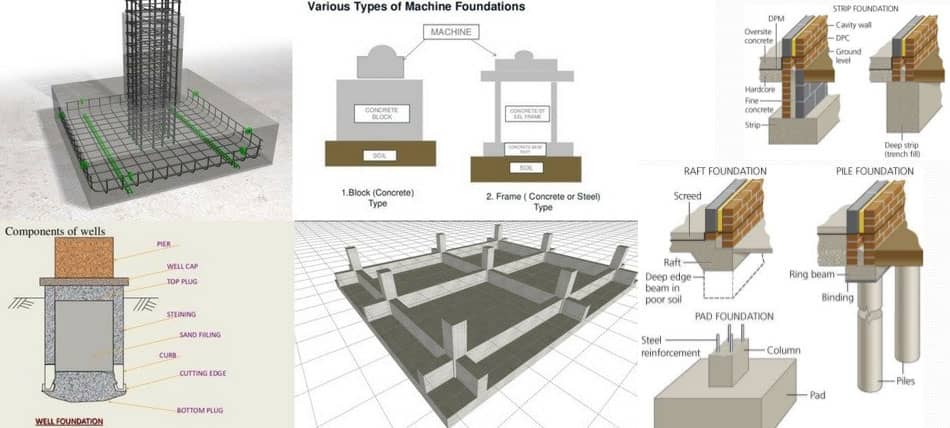
- Foundations and bases for RCC structures.
- Roadways, pathways, and flooring.
- Backfilling and bedding.
3. What is RCC (Reinforced Cement Concrete)?
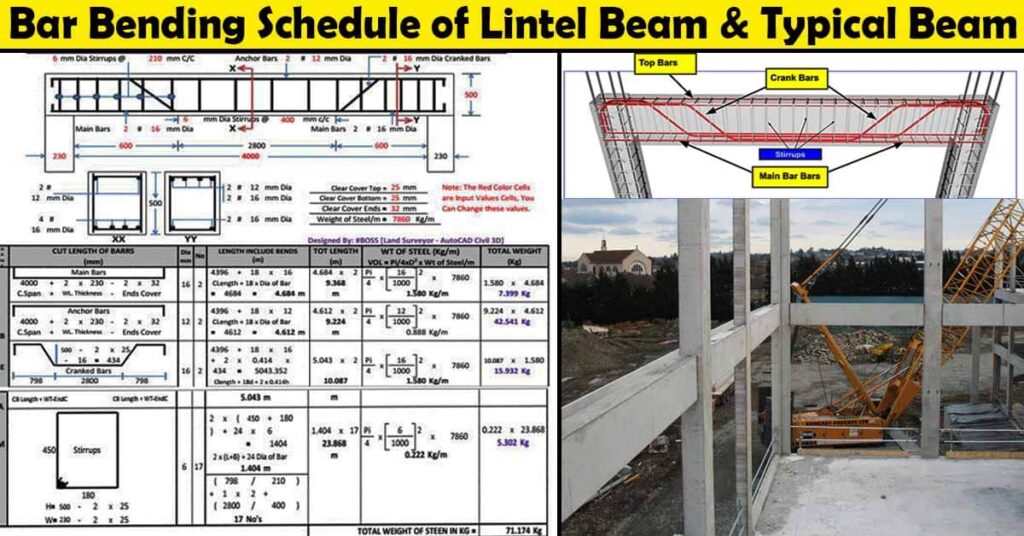
Reinforced Cement Concrete (RCC) is concrete embedded with steel reinforcement bars (rebars) to improve its tensile strength and ductility. The combination of concrete and steel allows RCC to withstand not only compressive forces but also tensile, shear, and bending stresses.
Key Characteristics of RCC:
- Contains steel reinforcement bars.
- High compressive and tensile strength.
- Suitable for load-bearing structures.
- Can be molded into various shapes.
- Provides resistance against cracking and deformation.
Typical Uses of RCC:
- Beams, columns, slabs, and foundations of buildings.
- Bridges, flyovers, and tunnels.
- Dams, retaining walls, and water tanks.
- Industrial structures requiring high load capacity.
4. Composition and Materials
PCC Composition:
- Cement: Ordinary Portland Cement (OPC) is commonly used.
- Fine Aggregate: Clean, well-graded sand.
- Coarse Aggregate: Gravel or crushed stone usually ranging between 10mm to 20mm.
- Water: Clean and free from impurities.
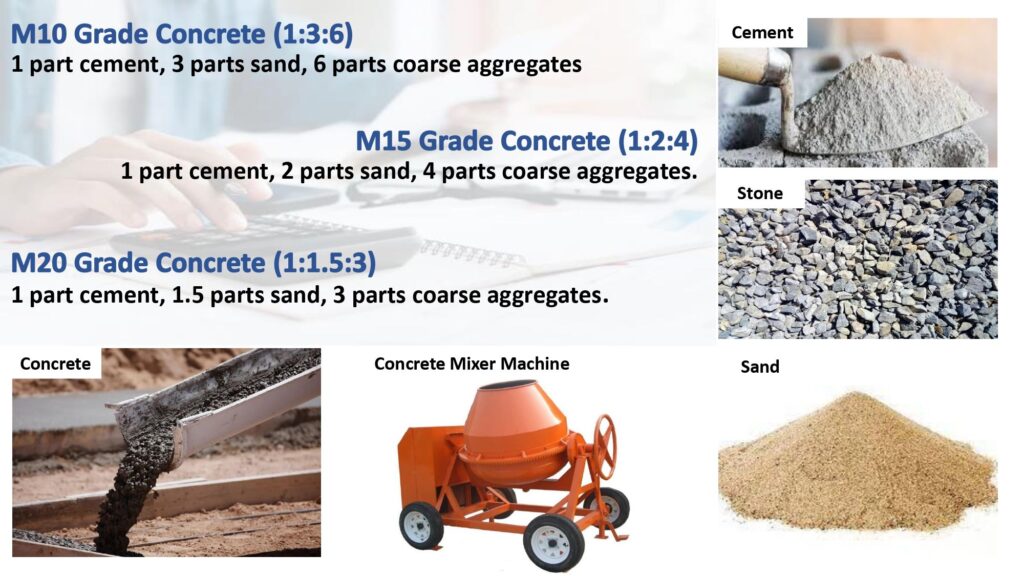
- Mix Ratio: Commonly ranges from 1:3:6 (cement : sand : aggregate) for foundations, depending on the strength required.
RCC Composition:
- Cement, sand, coarse aggregate, and water as in PCC.
- Steel Reinforcement: High tensile strength steel bars placed in designed patterns.
- Mix Ratio: Typically stronger mixes like 1:2:4 or 1:1.5:3 depending on design specifications.
- Concrete Grade: Higher grades like M20, M25, M30 are used to meet structural requirements.
5. Strength and Structural Properties
PCC:
- Designed mainly for compressive strength.
- Typical compressive strength ranges between 7 MPa to 20 MPa.
- Cannot resist tensile or bending forces effectively.
- Brittle in nature and prone to cracking under tensile stress.
RCC:
- Designed for both compressive and tensile strength.
- Compressive strength can range from 20 MPa up to 50 MPa or more, based on mix design.
- Tensile strength is improved due to embedded steel.
- High ductility and toughness.
- Can resist bending, shear, and torsion forces, making it suitable for structural elements.
6. Construction Techniques
PCC Construction:
- Simple mixing, placing, and compacting.
- Usually laid on prepared subgrade or base.
- Surface is leveled and finished.
- No special curing beyond normal concrete curing practices.
- Typically used as a base layer before RCC is placed.
RCC Construction:
- Requires accurate placement of steel reinforcement according to design drawings.
- Proper tying and spacing of rebars.
- Formwork or shuttering to mold the concrete.
- Careful mixing, placing, and compacting to avoid honeycombing.
- Curing is critical to ensure strength development.
- Skilled labor and supervision needed for reinforcement and concrete quality control.
7. Applications of PCC and RCC
Applications of PCC:
- Sub-base for roads and pavements.
- Foundation beds for structures.
- Flooring for non-load bearing surfaces.
- Temporary structures and mass concrete works.
- Backfilling and leveling purposes.
Applications of RCC:
- Structural elements such as beams, columns, slabs, and footings.
- Multi-storey buildings and bridges.
- Water retaining structures like tanks and dams.
- Industrial floors and heavy load-bearing surfaces.
- Infrastructure projects requiring high strength and durability.
8. Advantages and Disadvantages
PCC Advantages:
- Economical and easy to use.
- Requires less skilled labor.
- Quick to construct.
- Provides solid base for RCC.
PCC Disadvantages:
- Low tensile strength.
- Not suitable for structural applications.
- Prone to cracking under tensile or bending stresses.
RCC Advantages:
- High strength and durability.
- Can withstand tensile, compressive, and bending stresses.
- Suitable for all types of structural elements.
- Longer lifespan and better performance under loads.
RCC Disadvantages:
- Higher cost due to steel and skilled labor.
- Complex construction process.
- Requires precise quality control.
- Susceptible to corrosion of steel if not properly protected.
9. Cost Implications
- PCC is generally cheaper due to the absence of steel and simpler construction techniques.
- RCC involves higher material and labor costs due to steel reinforcement, formwork, and skilled workforce.
- However, RCC’s durability and load-bearing capacity make it cost-effective for structural applications in the long run.
10. Durability and Maintenance
- PCC structures have limited durability and are prone to surface wear and cracking.
- RCC, when properly designed and maintained, offers excellent durability.
- Corrosion of steel in RCC can lead to structural damage if protective measures are not taken.
- Regular inspection and maintenance are critical for RCC structures.
11. Design Considerations
- PCC is designed primarily based on compressive strength requirements.
- RCC design involves complex calculations considering bending moments, shear forces, and load factors.
- Reinforcement detailing is crucial in RCC to ensure safety and performance.
- Codes and standards such as IS 456 (Indian Standard) or ACI (American Concrete Institute) guidelines are followed for RCC design.
12. Common Mistakes and Best Practices
Common Mistakes:
- Using PCC where RCC is required.
- Improper mixing and curing leading to weak concrete.
- Incorrect placement or insufficient quantity of reinforcement in RCC.
- Poor compaction causing honeycombing.
Best Practices:
- Accurate material proportioning and mixing.
- Proper curing to achieve required strength.
- Following design specifications meticulously.
- Skilled supervision during reinforcement laying and concreting.
13. Environmental Impact
- Concrete production contributes significantly to CO2 emissions.
- PCC, being simpler, has a slightly lower carbon footprint than RCC.
- Use of recycled aggregates, fly ash, and other supplementary cementitious materials can reduce environmental impact.
- Proper design reduces material wastage and extends service life, benefiting sustainability.
14. Summary and Conclusion
| Feature | PCC (Plain Cement Concrete) | RCC (Reinforced Cement Concrete) |
|---|---|---|
| Composition | Cement, sand, aggregate, water (no reinforcement) | Cement, sand, aggregate, water + steel reinforcement |
| Strength | Compressive strength only | Compressive + tensile + shear strength |
| Use | Base, flooring, non-structural | Load-bearing structural elements |
| Construction | Simple, no steel placement | Complex, requires steel fixing and formwork |
| Cost | Lower | Higher due to steel and labor |
| Durability | Moderate | High, if properly maintained |
| Suitable for | Non-load bearing applications | Structural components |
In summary, PCC and RCC serve different functions in construction. PCC is ideal as a base or for non-structural applications where compressive strength suffices. RCC is indispensable for structural applications requiring high strength in multiple directions. A clear understanding of these materials ensures appropriate usage, safety, and longevity of construction projects.
15. FAQs
Q1: Can PCC be used for structural elements?
A: No, PCC lacks