What’s the difference between tensile and compressive strength? Our guide explains how materials handle pulling vs. crushing forces, with real-world examples for engineers and designers.
Pulling vs. Crushing: The Critical Difference Between Tensile and Compressive Strength
In the world of materials and structures, strength isn’t a single, universal value. It’s a story of how a material behaves under different types of stress. Two of the most fundamental characters in this story are Tensile Strength and Compressive Strength.

Understanding the difference between them is not just academic—it’s essential for designing everything from a simple bridge to a sophisticated aircraft.
In a nutshell:
- Tensile Strength is a material’s resistance to being pulled apart.
- Compressive Strength is a material’s resistance to being squeezed or crushed.
Let’s break down this crucial distinction.
The Head-to-Head Comparison
Here is a table that highlights the core differences at a glance.
| Feature | Tensile Strength | Compressive Strength |
|---|---|---|
| Definition | Resistance to forces that pull the material apart. | Resistance to forces that squeeze or crush the material. |
| Type of Force | Tension (Stretching) | Compression (Pushing) |
| Effect on Material | Elongates and narrows (lateral contraction). | Shortens and bulges (lateral expansion). |
| Common Failure Mode | Ductile: Necking and fracture. Brittle: Sudden snap. | Ductile: Buckling or shearing. Brittle: Crushing or splitting. |
| Real-World Analogy | A rope in a tug-of-war. | A concrete column holding up a building. |
| Material Example | Steel: Very high tensile strength. | Concrete: Very high compressive strength. |
| Typical Test | Tensile Test (on a Universal Testing Machine) | Compression Test (on a Universal Testing Machine) |
A Deep Dive into Tensile Strength
The Concept: “Resisting Being Pulled Apart”
Tensile strength is the maximum amount of tensile (pulling) stress a material can withstand before failure, such as breaking or permanent deformation.
How It Works:
When you apply a tensile load, the material stretches. Initially, this deformation is elastic (it will spring back to its original shape). After a certain point (the yield strength), it becomes plastic (permanently deformed). If the load continues to increase, the material will eventually fracture.

The “Necking” Phenomenon:
In ductile materials like steel, you’ll see a fascinating behavior just before failure: necking. The material begins to thin down significantly at one location, concentrating the stress until it finally snaps.
Key Values from a Tensile Test:
- Yield Strength: The stress at which the material begins to deform plastically.
- Ultimate Tensile Strength (UTS): The maximum stress the material can withstand.
- Fracture Strength: The stress at which the material completely breaks.
Real-World Applications:
- Steel Rebar in concrete: Provides tensile resistance where concrete is weak.
- Cables in suspension bridges: Hold the entire deck in tension.
- Aircraft Wings: Experience tensile loads during flight.
- Ropes, Chains, and Tethers: Their entire purpose is to resist tension.
A Deep Dive into Compressive Strength
The Concept: “Resisting Being Crushed”
Compressive strength is the maximum amount of compressive (pushing) stress a material can withstand before it fails by crushing or buckling.
How It Works:
Under a compressive load, the material is pushed together, causing it to shorten. For brittle materials like concrete, failure is often a sudden, explosive crushing. For slender elements (like a long column), failure often occurs due to buckling—a sudden sideways deflection and collapse—long before the material actually crushes.
The Buckling Factor:
Compressive strength is highly dependent on the geometry of the element. A short, fat column will crush, while a long, slender column of the exact same material will buckle under a much lower load.
Real-World Applications:
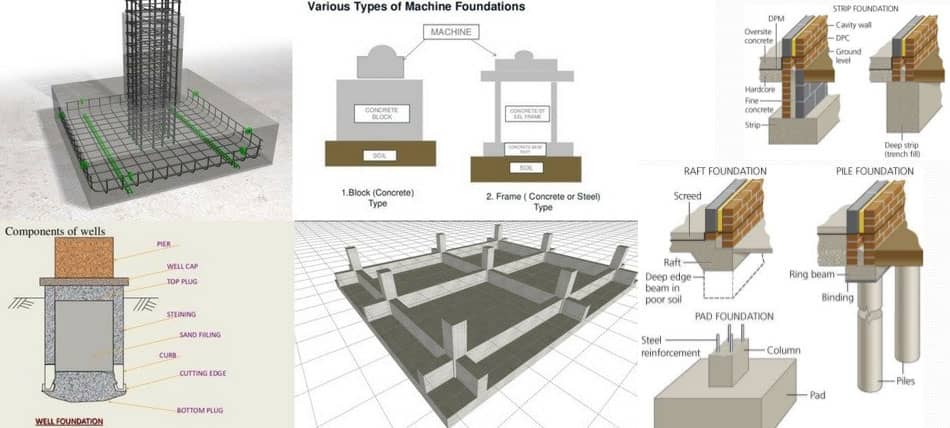
- Concrete Columns and Foundations: Designed to carry compressive loads from the structure above.
- Brick and Stone Walls: Ancient structures like the Roman aqueducts rely on the high compressive strength of stone.
- Aircraft Landing Gear: Absorb the massive compressive force of landing.
- The Legs of a Chair: They are under compression from the weight of the person sitting.
The Classic Partnership: Steel and Concrete
The relationship between tensile and compressive strength is perfectly illustrated by Reinforced Concrete (RC).
- Concrete is like a strong, brittle rock. It has very high compressive strength but very low tensile strength (about 1/10th of its compressive strength). If you try to bend it, it will crack on the bottom (tension side).
- Steel Rebar is the opposite. It has very high tensile strength and is ductile.
In an RC beam, these two materials work in perfect synergy:
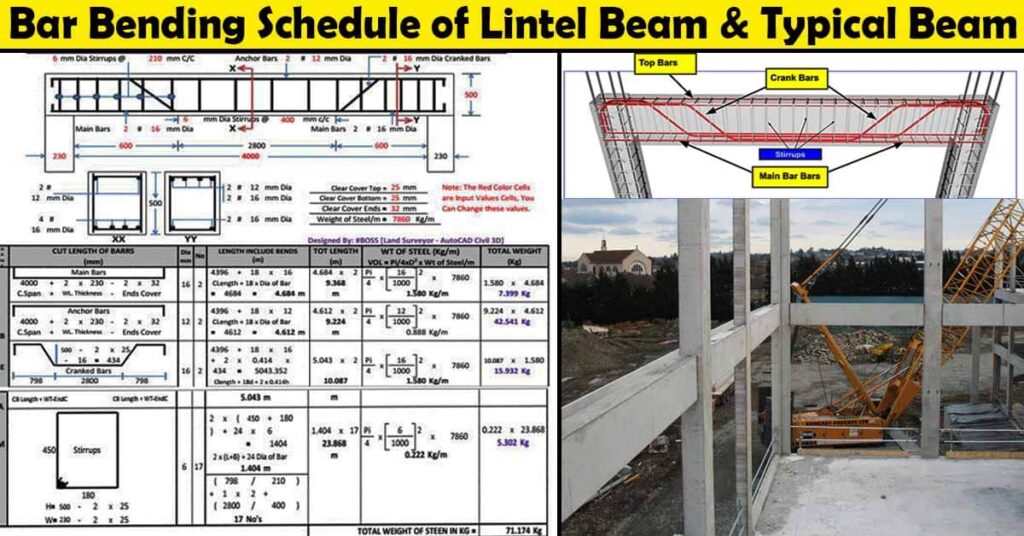
- The concrete resists the compressive forces at the top of the beam.
- The steel rebar placed near the bottom resists the tensile forces.
This combination creates a composite material that is strong, durable, and cost-effective for a huge range of structural applications.
Key Takeaway for Designers and Engineers
The most important lesson is that a material strong in compression is not necessarily strong in tension, and vice versa.
When designing any component, you must ask:
- “What are the primary forces this part will experience?”
- “Is it being pulled, pushed, bent, or twisted?”
Selecting the right material and geometry based on this fundamental understanding is the cornerstone of safe and efficient engineering design.
Referrals for Further Reading
- “Mechanics of Materials” by Hibbeler or Gere & Goodno
- What it is: The foundational textbook for understanding stress, strain, and material behavior.
- Best for: A deep, mathematical and theoretical understanding.
- ASTM E8/E8M (Tension Testing) & ASTM E9 (Compression Testing) Standards
- What it is: The formal, standardized procedures for conducting these tests.
- Best for: Engineers and technicians who need to perform or specify material tests.
- Engineering Toolbox Website
- What it is: A fantastic online resource with tables of material properties, including tensile and compressive strengths for various materials.
- Best for: Quick reference and comparison of material values.