The Prosecutor’s Proposal (2026) is a gripping mystery-thriller where two men bound by tragedy become each other’s only salvation. We review the intense, passionate K-drama that will destroy you.
Let me ask you a deeply uncomfortable question. Imagine you are fifteen years old. The single most important person in your world—your father—is brutally murdered. You watch the police drag the killer away in handcuffs. Your life fractures. But now, imagine an alternate version of that same night. Imagine you are the killer’s son. You watch your father disappear into the justice system, and you spend the rest of your life being stared at, whispered about, and judged by your schoolmates, neighbors, and the world.
This is the devastating premise of The Prosecutor’s Proposal (2026), a new, 10-episode Korean mystery-thriller that is already making waves for its raw emotional intensity and unflinching look at trauma. Director Yang Kyung Hee has crafted a show that is so much more than a standard “who killed the casino mogul” story. It is a visceral, heartbreaking, and deeply romantic exploration of two men who are bound together by blood, tragedy, and a destiny that refuses to let them go.
Korean BL Series “The Prosecutor’s Proposal” Official Trailer! Premieres on June 25🔥︱GagaOOLala
Let’s break down why The Prosecutor’s Proposal is an absolute must-watch for fans of deep, dark, and passionate storytelling.
The Scars of 15 Years Ago: Two Boys, Two Fates
Before we talk about the present, we must sit in the trauma of the past. The brilliance of this drama lies in its refusal to gloss over the childhood trauma of its two leads.
The Hollow Ache of the Victim’s Son
Our first protagonist is the son of the victim. He grows up to become a prosecutor—a rigid, controlled, and fiercely dedicated man of law. On the surface, he has everything together. He wears perfectly pressed suits. He speaks with sharp, decisive authority.
But underneath that armor, there is a gaping, hollow ache. He lost his father. Not just physically, but emotionally. He never got to see his father grow old. He never got to ask his father for advice about love or career. That unspeakable loss has made him incapable of trusting anyone. He puts every criminal in a box because he desperately needs the world to be black and white. If he lets in the gray, he might have to admit that his father’s death was senseless, random, and utterly cruel.
The Blood-Stained Burden of the Killer’s Son
Then, we have the second lead: the son of the killer. He grows up to become an investigator. He is quiet, withdrawn, and possesses a hyper-vigilance that borders on paranoia. He is brilliant at reading people, not because he studied psychology, but because he has spent his entire life reading the whispers of strangers.
The crushing weight of this character is beautifully written. He was never guilty of the murder. Yet, because of the blood in his veins, society branded him. He constantly fights the urge to disappear. He is desperate to prove to the world, and more importantly to himself, that he is not the monster his father was. This internal battle makes him incredibly guarded, yet deeply empathetic to the pain of others.
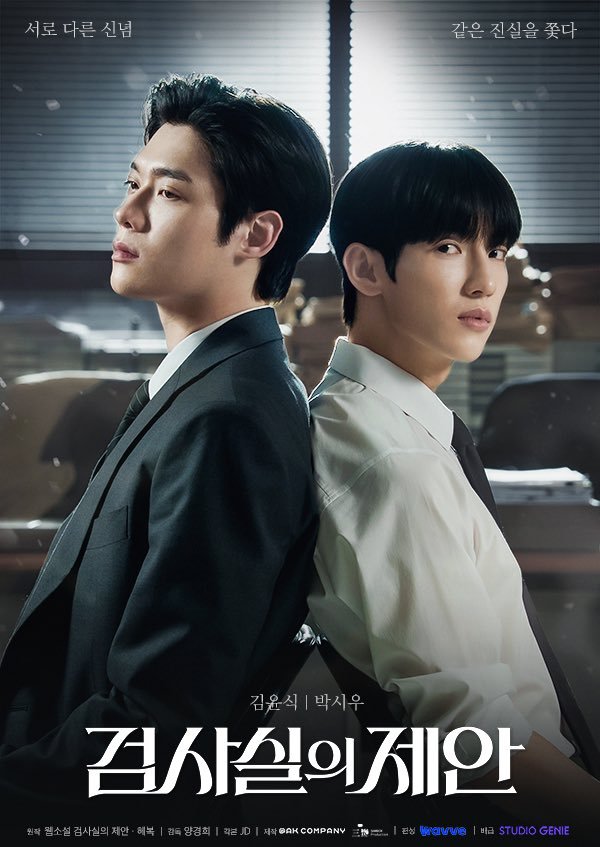
The Unholy Reunion: Prosecutor Meets Investigator
Years pass. Fate, being as cruel as it is, forces these two men back into the same orbit.
The Explosive First Encounter
They are assigned to work together on a fresh case—a case that eerily echoes the patterns of the 15-year-old casino murder. When the Prosecutor lays eyes on the Investigator, the air in the room becomes physically thick. For the Prosecutor, this man is a walking, breathing reminder of his worst nightmare. He sees the killer’s face superimposed over the Investigator’s.
For the Investigator, meeting the Prosecutor is like staring into a mirror that judges him. He knows exactly who the Prosecutor is, and he knows the Prosecutor is looking at him with pure, unadulterated hatred. Their first interactions are not just tense; they are explosive. They verbally tear into each other, exposing each other’s deepest insecurities like exposed nerves. It is raw, aggressive, and incredibly painful to watch.
The “Vicious Cycle of Destiny”
Here is where the thriller aspect takes hold. As they dig into the new case, they quickly realize that the past is not buried. The murder of the casino mogul was not a random act of violence. It was a calculated hit orchestrated to silence someone who knew too much about a massive corruption network.
Every clue they uncover pulls them deeper into the shadowy underworld of the mega-corporation and the prosecution office itself. The past literally refuses to die. The Investigator finds evidence that might clear his father’s name. The Prosecutor realizes that his father was investigating something deeply dangerous before he died. They aren’t just solving a case; they are reliving their childhood trauma in real-time, and the walls are closing in around them.
The Massive Web of Corruption
The villain in this show isn’t a single person. It is a systemic, hydra-headed monster.
The Mega-Corporation and the Prosecution’s Rot
The screenplay writer has done an outstanding job mapping out the network of corruption. The casino mogul was killed because he was about to expose a massive money-laundering operation tied to a mega-corporation. But the corporation didn’t act alone. They had moles inside the prosecution office.
The Prosecutor quickly realizes that he cannot trust his own colleagues. When he presents evidence, it mysteriously disappears. When he tries to arrest a suspect, a higher-up intervenes. This “Kangaroo Court” atmosphere creates an incredible pressure cooker. He is a prosecutor fighting against his own institution. He is a knight fighting a dragon while wearing borrowed armor.
The Heartbeat of the Mystery
The show masterfully delivers twists that actually serve the characters. Every time you think you have figured out who the “big bad” is, the story pivots, revealing a deeper layer of betrayal. It keeps you on the edge of your seat, not just because you want to know the answer, but because you desperately want these two broken men to survive long enough to find it.
The Romance: A Slow-Burn Born from Shared Trauma
Now, let’s talk about the heart of the show. Because yes, underneath all the crime and corruption, The Prosecutor’s Proposal is an intense, agonizing romance.
More Than Just Enemies-to-Lovers
Let’s be clear: this is not a simple “they hate each other, then they kiss” trope. The show forces the characters to sit in the discomfort of their shared history. The Prosecutor cannot look at the Investigator without feeling the ghost of his dead father. The Investigator cannot look at the Prosecutor without feeling the ghost of his criminal father.
But then, something shifts. In a quiet moment—perhaps a late-night stakeout or a terrifying ambush—the Prosecutor sees something in the Investigator’s eyes. He sees exhaustion. He sees a boy who has spent a lifetime being punished for a crime he didn’t commit.
In that moment, the Prosecutor makes a choice. He looks past the bloodline and sees the human. It isn’t an easy realization. It comes with tears, guilt, and a profound sense of betrayal towards his own dead father’s memory. But once he makes that choice, the dynamic changes. He starts to protect the Investigator. He starts to trust him.
Fatal Weakness, Only Salvation
The tagline for this show is incredibly poignant: They become each other’s fatal weakness and only salvation.
Why are they fatal weaknesses? Because they have spent years perfecting the art of pushing people away. They are experts at inflicting pain because they know exactly where the other person is bleeding. When they fight, they draw blood.
But why are they salvation? Because only these two men on the entire planet understand the true, horrific weight of that night 15 years ago. Only the Investigator can understand the Prosecutor’s loss. Only the Prosecutor can understand the Investigator’s burden. When they finally stop fighting and start holding each other up, it is the most cathartic, beautiful, and emotionally devastating thing you will watch this year.
The Technical Brilliance: Directing and Pacing
Director Yang Kyung Hee deserves immense praise for the visual and emotional control of this series.
Mastery of Tension
The cinematography is claustrophobic. The camera often uses extreme close-ups on the characters’ eyes, forcing us to see the micro-tremors of fear and recognition. The color palette is muted, relying heavily on cold grays, deep blues, and shadowy blacks. Even the brightly lit prosecution office feels cold.
The sound design is equally brilliant. The silence between the leads is deafening. You can hear a pin drop in a room full of people when the Prosecutor and the Investigator make eye contact. The use of ambient noise—the ticking of a clock, the hum of a computer—heightens the tension to unbearable levels.
The 10-Episode Structure
We must appreciate the 10-episode runtime. There is zero filler. Every scene serves a purpose. Western shows with 22 episodes often bloat the plot with romantic subplots that don’t serve the main story. The Prosecutor’s Proposal is lean, mean, and relentlessly paced. You will find it nearly impossible to stop watching. Each episode ends on a cliffhanger that feels less like a gimmick and more like a punch to the gut.
Is The Prosecutor’s Proposal Right for You?
If you are looking for a lighthearted workplace rom-com, this is absolutely not the show for you. But if you appreciate stories that are willing to get their hands dirty in the pursuit of emotional truth, this is a masterpiece.
Who Will Be Captivated
This show is a spiritual sibling to masterpieces like Beyond Evil and Mouse. It is a psychological thriller with a beating, bleeding heart. If you love shows that explore the gray areas of morality, the weight of childhood trauma, and the redemptive power of human connection, you will be utterly captivated.
A Crucial Trigger Warning for Trauma
I have to be completely, utterly honest and trustworthy here. This show is heavy. It deals with extreme violence, the murder of a parent, childhood trauma, suicide, institutional corruption, and relentless psychological torment. There are moments that are incredibly difficult to watch.
If you are currently dealing with intense grief or are sensitive to depictions of trauma, please protect your mental health. Approach this drama with caution. It is not an easy watch, but for those who can handle the weight, it is an unforgettable, cathartic experience.
Conclusion: The Choice of Destiny
The Prosecutor’s Proposal (2026) asks us a profound question: Is destiny something that happens to us, or is it something we choose?
The two men in this drama were tied together by the red thread of tragedy from the moment they were children. They could have chosen to hate each other until the end of their lives. But somewhere along the way, they looked at each other and chose differently. They chose to see the survivor instead of the victim. They chose to see the redeemed instead of the condemned.
In a world full of corruption, backstabbing, and endless bloodshed, they chose each other. It is tragic. It is devastating. But it is also the most beautiful, passionate, and fiercely hopeful message I have seen on screen this year.
Alright, let’s talk in the comments. If you have watched The Prosecutor’s Proposal, I want to know: did you cry during the revelation of the father’s secret? And for those who haven’t watched yet, what is the one K-drama that completely shattered your emotions and put you back together? Let’s share our broken hearts and healing stories below!