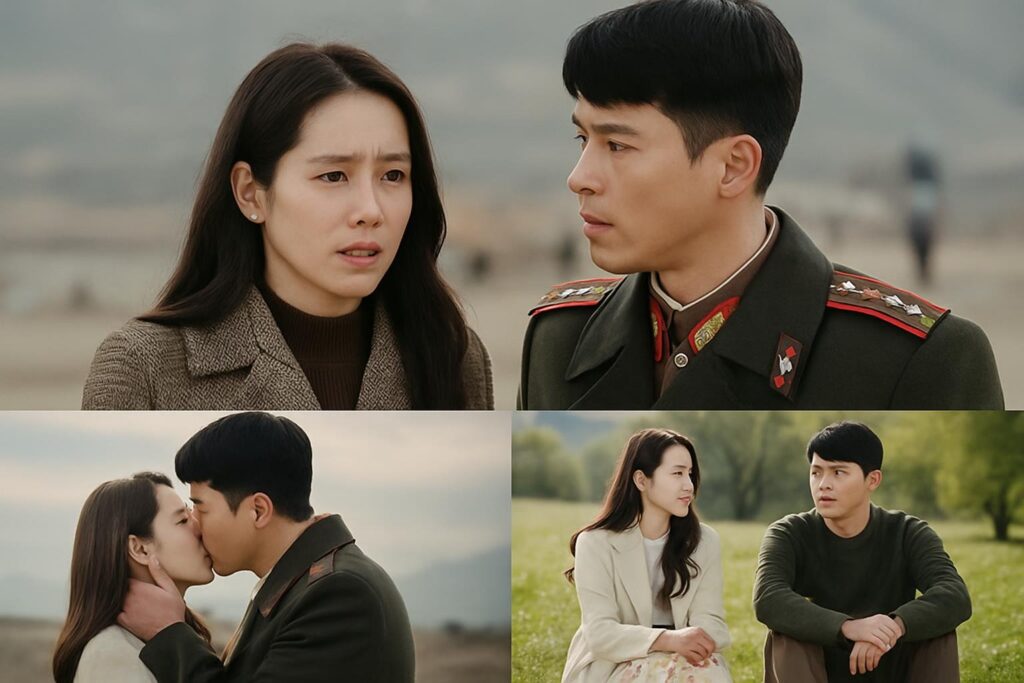
The landscape of Korean dramas is often painted with the broad strokes of “romance” or “thriller,” but every so often, a series emerges that transcends genre to become a cultural phenomenon. Netflix’s The Glory, written by the legendary Kim Eun-sook and directed by Ahn Gil-ho, is that rare masterpiece.
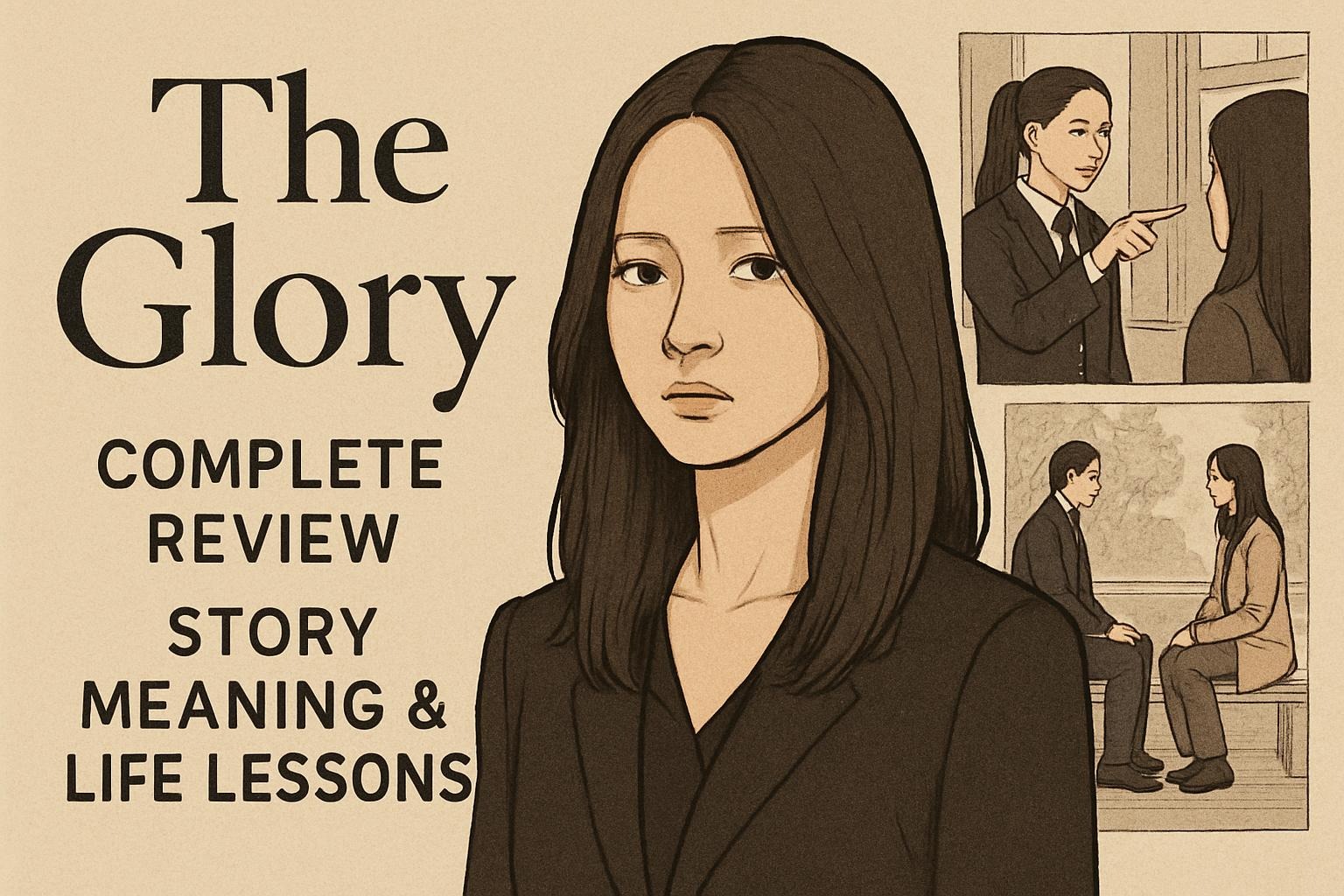
Moving away from her usual “rom-com” comfort zone (Goblin, Descendants of the Sun), Kim Eun-sook delivers a chilling, meticulously crafted narrative about Moon Dong-eun, a woman whose soul was shattered by school violence and who spends two decades meticulously piecing herself back together—not for healing, but for revenge.
Part 1: The Narrative Arc – A Symphony of Cold Fury
The story is split into two halves, mirroring the two phases of its protagonist’s life: the Destruction and the Execution.
The Foundation of Pain
The series opens with scenes that are notoriously difficult to watch. We witness the high school years of Moon Dong-eun, a girl from a poor background with no protection. She is subjected to horrific physical and psychological torture by a group of wealthy, bored classmates led by the chillingly charismatic Park Yeon-jin.
The use of a curling iron to burn Dong-eun’s skin serves as a visceral metaphor throughout the series. These scars aren’t just physical; they represent the permanent “heat” of trauma that never cools. When Dong-eun drops out of school, she realizes the world is not fair—the police, the teachers, and even her own mother are complicit in her abuse because of the perpetrators’ wealth.
The Long Game
What sets The Glory apart from other revenge thrillers is the patience of the protagonist. Dong-eun doesn’t just buy a weapon; she buys time. She spends 18 years working menial jobs, studying for her teaching degree, and learning the “Go” (Baduk) board game.
Her revenge is architectural. She places herself in the center of her enemies’ lives—becoming the primary school teacher of Yeon-jin’s daughter. She doesn’t use physical violence initially; she uses the truth, a weapon her enemies are ill-equipped to handle because their lives are built on lies.
Part 2: Character Psychology – The Anatomy of Evil and Empathy
Moon Dong-eun: The “Glory” in Ruin
Song Hye-kyo delivers a career-defining performance. She portrays Dong-eun as a woman who is “dead while alive.” Her lack of a smile, her monochromatic wardrobe, and her hollow eyes suggest a person who has sacrificed her own humanity to ensure her tormentors lose theirs. Her “Glory” is the irony of the title: there is no glory in revenge, only the completion of a grim task.
The Villains: A Study in Narcissism
The antagonists are not “misunderstood.” The Glory makes a bold choice to make Park Yeon-jin (played with terrifying brilliance by Lim Ji-yeon) and her clique irredeemable.
- Park Yeon-jin: The leader who views people as disposable objects.
- Jeon Jae-jun: The embodiment of toxic privilege and entitlement.
- Lee Sa-ra & Choi Hye-jeong: The followers who crave status but lack the power of the leaders.
Their downfall is fascinating because it is fueled by their own internal betrayals. As Dong-eun applies pressure, the group—built on shallow vanity rather than loyalty—instantly begins to devour itself.
The “Executioner” and the “Enabler”
The supporting cast provides the emotional anchor. Joo Yeo-jeong, the plastic surgeon with his own dark secrets, serves as Dong-eun’s “executioner” rather than her “prince.” Their relationship is unique; it’s not built on traditional romance but on a shared understanding of darkness. Kang Hyeon-nam, the victim of domestic abuse who joins Dong-eun, provides the show’s rare moments of warmth and humor, reminding us that trauma can also forge the strongest alliances.
Part 3: Story Meaning – The Philosophy of the “Go” Board
The game of Go (Baduk) serves as the central metaphor for the series. Unlike chess, where you capture a king, Go is about encircling territory and slowly stripping your opponent of their “breathing room.”
- Silence as a Weapon: Dong-eun wins by making her enemies talk while she remains silent.
- The Illusion of Protection: The villains believe their money and status are their “territory.” Dong-eun proves that once their reputation is breached, they have no walls left to hide behind.
- Divine Indifference: The show touches heavily on the absence of God in the face of suffering. Dong-eun famously says, “There will be no glory, although I hope you’ll stay for the long haul.” She takes on the role of a vengeful deity because she felt abandoned by the real one.
Part 4: Life Lessons – Beyond the Screen
While The Glory is a work of fiction, its roots in real-world Korean school bullying scandals (the “Curling Iron Case” of 2006) give it a haunting weight. Here are the core lessons:
- The Persistence of Trauma: Trauma is not something you “get over”; it is something you live with. The series validates the long-term mental health struggles of survivors.
- The Failure of Systems: The show is a scathing critique of institutional apathy. When teachers and police fail, victims are forced into “self-help” justice, which destroys the victim as much as the perpetrator.
- The Fragility of Evil: Evil characters often appear invincible when they are united by a common victim. However, once that victim fights back, the “friendships” of the wicked crumble because they are based on power, not love.
- The Cost of Revenge: The ending of the series is bittersweet. It poses a difficult question: After you have spent your whole life destroying someone else, what is left of you?
Final Verdict
The Glory is a 10/10 masterclass in tension and character development. It avoids the clichés of “forgiveness” and instead offers a gritty, realistic look at what it takes to reclaim one’s dignity after it has been stripped away. It is a slow-burn thriller that rewards the viewer’s patience with one of the most satisfying finales in K-drama history.
Key Takeaway: The Glory isn’t just a story about hate; it’s a story about the desperate, agonizing search for a “spring” that was stolen 18 years ago.
Would you like me to analyze a specific character’s ending in more detail, or perhaps compare this to other revenge-themed dramas?