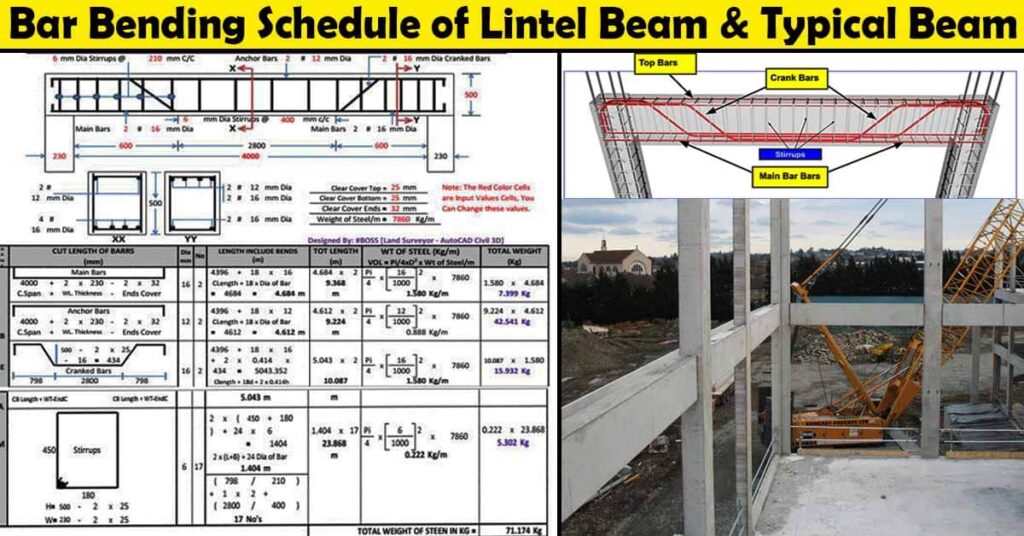
Master the fundamentals! Our guide covers the basic structural formulas every engineer must know, from bending stress to deflection, with clear explanations and real-world applications.
The Engineer’s Toolkit: Basic Structural Formulas You Can’t Forget
In the world of structural engineering, sophisticated software and finite element analysis (FEA) have become the norm. But before a computer can provide an answer, an engineer must understand the fundamental principles that govern how structures behave. These principles are encapsulated in a set of timeless, basic formulas.

These formulas are the foundation of intuition. They are the mental checks that separate good engineers from great ones. Whether you’re reviewing a software output, designing a quick fix in the field, or answering a technical interview question, these are the basic structural formulas you must know by heart.
1. Stress: The Internal Resistance
The Concept: Stress (σ or τ) is the internal force experienced by a material per unit area. It’s the fundamental measure of how hard a material is “working.”
The Formula:
σ = P / A
- σ = Stress (Pa or psi)
- P = Applied Axial Force (N or lb)
- A = Cross-Sectional Area (m² or in²)
When to Use It: This is your go-to for axial members like columns in compression, hangers in tension, and bolts. It tells you if a member is being squeezed or stretched too much.
2. Strain: The Measure of Deformation
The Concept: Strain (ε) is the deformation of a material relative to its original length. It’s a dimensionless measure of how much something has stretched or compressed.
The Formula:
ε = δ / L
- ε = Strain
- δ = Change in Length (m or in)
- L = Original Length (m or in)
When to Use It: Essential for understanding material behavior and connecting stress to deflection through Hooke’s Law.
3. Hooke’s Law: The Link Between Stress and Strain
The Concept: For most materials within their elastic limit, stress is directly proportional to strain. The constant of proportionality is the material’s stiffness.
The Formula:
σ = E * ε
- E = Modulus of Elasticity or Young’s Modulus (Pa or psi)
- Steel: ~200 GPa (29,000 ksi)
- Concrete: ~20-30 GPa (3,000-4,500 ksi)
When to Use It: This is the bedrock of linear-elastic analysis. It’s used to calculate deformation, stress from a known strain, and vice-versa.
4. The Bending Stress Formula (The Flexure Formula)
The Concept: Perhaps the most important formula in beam design. It calculates the stress caused by a bending moment.
The Formula:
σ = M * y / I
- σ = Bending Stress (Pa or psi)
- M = Applied Bending Moment (N·m or lb·in)
- y = Distance from the Neutral Axis (m or in)
- I = Moment of Inertia (m⁴ or in⁴)
For the maximum stress at the outer fiber (where y = c), it becomes:
σ_max = M * c / I
This is often rearranged using the Section Modulus (S = I / c):
σ_max = M / S
When to Use It: Designing any beam, girder, or flexural member. It tells you if a beam is strong enough to resist the bending moments applied to it.
5. The Shear Stress Formula
The Concept: For beams, this formula calculates the horizontal shear stress, which is often critical near supports.
The Formula (for beams):
τ = V * Q / (I * b)
- τ = Shear Stress (Pa or psi)
- V = Applied Shear Force (N or lb)
- Q = First Moment of Area (m³ or in³)
- I = Moment of Inertia (m⁴ or in⁴)
- b = Width of the cross-section at the point of interest (m or in)
When to Use It: Checking shear capacity in beams, especially I-beams (where the web resists most of the shear) and timber beams.
6. The Torsion Formula
The Concept: This formula calculates the shear stress in a circular shaft due to an applied torque.
The Formula (for circular sections):
τ = T * r / J
- τ = Shear Stress due to Torsion (Pa or psi)
- T = Applied Torque (N·m or lb·in)
- r = Radius of the shaft (m or in)
- J = Polar Moment of Inertia (m⁴ or in⁴)
When to Use It: Designing drive shafts, axles, or any member that transmits torque.
7. The Euler Buckling Formula
The Concept: This formula predicts the critical axial load at which a long, slender column will buckle elastically.
The Formula:
P_cr = π² * E * I / (K * L)²
- P_cr = Critical Buckling Load (N or lb)
- E = Modulus of Elasticity (Pa or psi)
- I = Moment of Inertia (m⁴ or in⁴)
- L = Column Length (m or in)
- K = Effective Length Factor (depends on end conditions)
When to Use It: Designing slender columns to prevent sudden, catastrophic buckling failure. It highlights the importance of I and how buckling strength decreases with the square of the length (L²).
8. Beam Deflection Formulas
The Concept: These formulas calculate how much a beam will bend under a given load. Serviceability (how a structure feels to users) is often governed by deflection limits.
Common Formulas (for simply supported beams):
- Point Load at Midspan: δ_max = (P * L³) / (48 * E * I)
- Uniformly Distributed Load (w): δ_max = (5 * w * L⁴) / (384 * E * I)
When to Use It: Ensuring that floors are not “bouncy,” that beams don’t sag visibly, and that deflections are within code limits (often L/360 for live loads).
Putting It All Together: The Universal Check
A good engineer doesn’t just know these formulas; they know how to apply them in a logical design sequence. For any member, you should be able to quickly assess:
- What are the internal forces? (Axial Force P, Shear Force V, Moment M)
- What is the critical stress? (Axial Stress, Bending Stress, Shear Stress)
- Is the stress within the material’s allowable limit? (σ_actual ≤ σ_allowable)
- Is the deformation acceptable? (δ_actual ≤ δ_allowable)
Conclusion: Formulas as a Foundation for Intuition
In an age of powerful software, these formulas are more than just calculations; they are the building blocks of engineering judgment. They allow you to sense when a computer output is wrong, to sketch out a viable design on a napkin, and to understand the “why” behind a structure’s behavior.
Keep this toolkit sharp. Review these formulas, understand the variables, and remember the principles they represent. They are the timeless language of structural integrity.
Referrals for Further Reading
- “Mechanics of Materials” by Gere and Goodno
- What it is: The classic university textbook that provides the deep theoretical background for all these formulas.
- Best for: Students and engineers seeking a thorough understanding.
- “Manual of Steel Construction” by AISC
- What it is: The essential reference for steel design in the U.S. It provides code-approved formulas, tables, and design procedures.
- Best for: Practicing structural engineers working with steel.
- “Roark’s Formulas for Stress and Strain”
- What it is: An encyclopedia of formulas for stress, strain, and deflection for virtually any geometry and loading condition.
- Best for: Solving complex, non-standard problems beyond the basic cases.