Deep In (2026) is a dizzying psychological romance where acting and reality blur. We review the 12-episode thriller about obsession, manipulation, and the dangerous line between fiction and truth.
Have you ever watched a movie and felt absolutely certain that the actor wasn’t just playing the role, but living it? That unsettling feeling that they might not be able to turn off the character when the director yells “Cut”?
That uncanny valley of reality versus performance is the terrifying, mesmerizing heartbeat of Deep In (2026), a breathtaking 12-episode Chinese psychological thriller directed by Liu Jun Hao. This is not a lighthearted romance about actors falling in love on set. This is a slow-burn, claustrophobic knife-edge thriller about the terrifying symbiosis between an artist and their art, and the price you pay when you lose the ability to tell the difference between the script and your own heartbeat.
Deep In 2026 Official Trailer! Premieres on June 26🔥︱GagaOOLala
Let’s dive into the psychological labyrinth of Deep In.
The Slump and the Audition: The Setup
Every great thriller needs a vulnerable entry point. Deep In gives us Zhang Zhun, an actor who is desperately clawing his way out of a profound career slump.
Zhang Zhun: The Actor Searching for a Pulse
Zhang Zhun isn’t just lacking good roles; he is lacking a soul. The script describes him as an actor who has lost his creative spark, but the reality is far more alarming. The career slump has drained his sense of self-worth. He is a hollow vessel, walking through life in a daze. He auditions for the film Into the Role not because he wants to be a star, but because he wants to feel something again.
This desperation is his fatal flaw. A hollow vessel is incredibly dangerous to place in the hands of someone who is looking for a toy to play with. When Zhang Zhun steps onto that set, he is offering his psyche up on a silver platter, completely unaware of the tiger waiting to devour it.
The Film “Into the Role”: A Script That Bites Back
The genius of the screenplay lies in the meta-narrative. The film Into the Role features two characters: a doctor and a patient. Their relationship is defined by a struggle of desire, emotional manipulation, and a terrifying codependency.
As Zhang Zhun and Zhen Xin start filming, they aren’t just reciting lines. They are being fed a psychological blueprint for their own lives. The script becomes a prophecy. The doctor/patient dynamic slowly bleeds off the screen and into their real-life interactions, making it utterly impossible to tell where the fiction ends and the obsession begins.
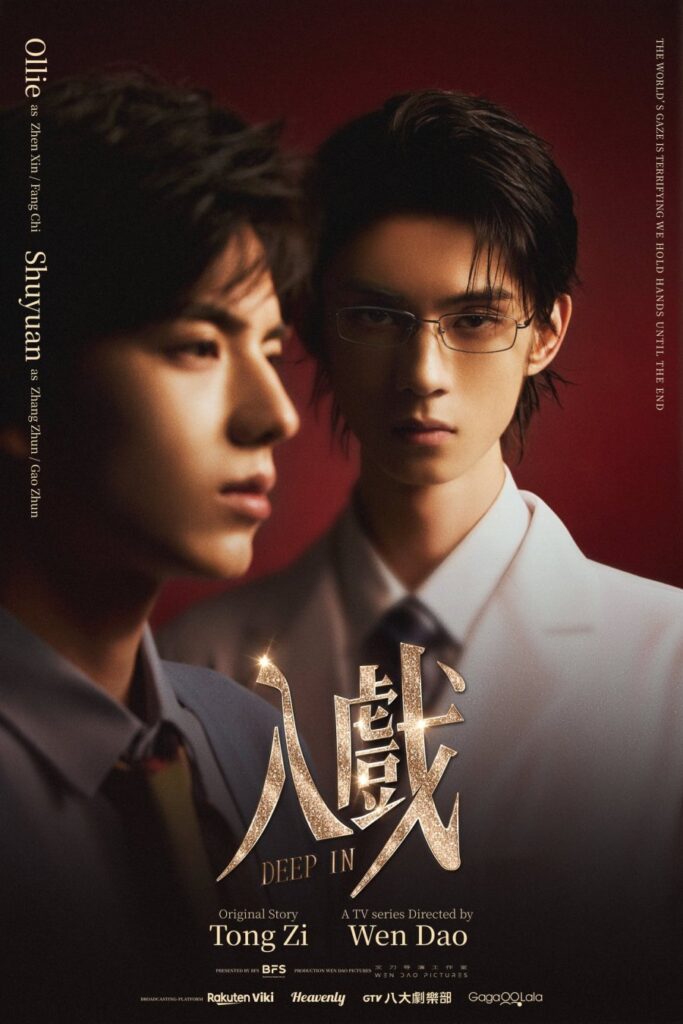
The Young Prodigy: Meet Zhen Xin
Now, let’s talk about Zhen Xin, the other half of this toxic equation. And we have to be honest here—he is the terrifying engine of this entire show.
Fame at a Young Age: The Poison of Early Success
Zhen Xin is a young actor who achieved massive fame as a child. He is incredibly talented, naturally charismatic, and magnetic when the cameras are rolling. But early fame is a subtle poison. It warps your understanding of boundaries. When you are treated like a god at 12 years old, you grow up believing that everything—and everyone—exists for your consumption.
This is where Zhen Xin’s pathology is rooted. He does not view Zhang Zhun as a fellow human being. He views him as a challenge. When he sees Zhang Zhun’s vulnerability, it doesn’t trigger empathy; it triggers a predatory instinct. He wants to break Zhang Zhun open because he wants to see what is inside.
The On-Set Magnetism
When the two men are in front of the camera, their chemistry is electric. Liu Jun Hao directs these scenes with a masterful blend of erotic tension and dread. They lock eyes, and the air in the room becomes static.
But the truly terrifying moments happen when the director yells “Cut.” Zhen Xin does not stop. The lingering stares continue. The possessive touches continue. He doesn’t step out of the role; he drags the role out into the real world. And Zhang Zhun, who is desperate to be a good actor, doesn’t know how to resist.
The Blurring of Reality: When the Mask Becomes the Face
As the episodes unfold, the barrier between performance and reality dissolves entirely.
The “Method” Trap
Zhang Zhun falls into the classic “method acting” trap. To portray the patient’s trauma and desire convincingly, he begins to suppress his own boundaries. He starts taking Zhen Xin’s real-life phone calls while staying in character. He starts wearing the patient’s costumes off-set. He is actively dismantling his own psyche to serve the art.
The horror in these scenes is palpable. We watch Zhang Zhun look in the mirror and not recognize his own reflection. He will have a conversation with Zhen Xin, and a few seconds later, he will look confused, whispering, “Wait… was that me, or was that the character?” The show refuses to give us easy answers. We, the audience, start to lose track alongside him.
Zhen Xin’s Descent into Stalking
Meanwhile, Zhen Xin’s behavior escalates into full-blown stalking. It doesn’t happen overnight. It happens in increments. First, it’s just him waiting outside Zhang Zhun’s dressing room. Then, it’s him showing up at Zhang Zhun’s apartment, claiming he “just happened to be in the neighborhood.” Then, it’s him texting Zhang Zhun deeply intimate questions that only a lover—or a psychopath—would ask.
The show builds this tension with surgical precision. Every time Zhang Zhun turns a corner, we hold our breath. Is Zhen Xin there? Is he watching? The oppressive atmosphere makes the viewer feel exactly as trapped as Zhang Zhun does.
The Power Dynamics: Who Is Really in Control?
The most brilliant aspect of Deep In is its refusal to paint its characters in black and white.
The Labyrinth of Manipulation
On the surface, it seems obvious: Zhen Xin is the predator, and Zhang Zhun is the prey. But the show twists this dynamic. Zhang Zhun, desperate to feel alive and desperate to give a career-defining performance, allows himself to be consumed. There is a dark, masochistic part of him that feeds off the danger.
This makes the psychological push-and-pull incredibly complex. Is Zhen Xin manipulating Zhang Zhun? Absolutely. But is Zhang Zhun, in his desperate need to feel something, encouraging Zhen Xin to push harder? The show presents a toxic, codependent dance where the roles of “attacker” and “victim” constantly flip.
The Chilling Question of Consent
Deep In forces us to sit with an agonizing question: If a relationship is born from a manipulative on-screen script, can it ever be genuine?
When Zhen Xin kisses Zhang Zhun, is it a confession of real love, or is he just staying in character to maintain his acting high? When Zhang Zhun kisses back, is he genuinely attracted, or is he just addicted to the intensity of the performance? The show leaves this ambiguity hanging in the air like a noose, refusing to give us a comforting answer.
The Production Quality: Directing and Cinematography
Director Liu Jun Hao has crafted a visual and auditory masterpiece of unease.
Mastery of Unease
The cinematography relies heavily on claustrophobic close-ups. We spend most of the show staring into the characters’ eyes—staring into their micro-expressions, their trembling lips, their dilated pupils. The color grading is deliberately unsettling; the on-set scenes are bathed in feverish, blood-red light, while the off-set scenes are dominated by clinical, cold blues. The constant use of mirrors—where characters watch themselves acting, watching themselves fragment—is a visual metaphor for the fractured psyche at the core of the story.
The Soundscape of Paranoia
The auditory design is equally brilliant. We hear the amplified sound of Zhang Zhun’s heartbeat in moments of high tension. We hear the deafening silence of a dead phone call where Zhen Xin is breathing heavily on the other end. The screech of a chair sliding on a concrete floor becomes a jump-scare. The show uses sound to play with your nervous system, making you feel as paranoid as the protagonist.
The Core Question: Performance or Predation?
At its philosophical core, Deep In is asking a profound question: If you wear a mask for long enough, does it become your face?
The show presents an epistemological crisis. Zhang Zhun goes through an entire emotional breakdown. He weeps. He rages. He confesses his deepest fears to Zhen Xin. But then, a few scenes later, he walks onto the set and delivers a flawless performance. Is he genuinely breaking down, or is he just that good of an actor that he can simulate it?
The devastating finale answers this question in the most terrifying way possible. Spoiler-free, I will say this: the final scene will leave you staring at the screen, wondering who exactly you just watched for the last 12 hours. It is a gut-punch that perfectly completes the thesis: Art consumes everything it touches.
Is Deep In Right for You?
If you are looking for a lighthearted, fluffy romance to watch on a cozy weekend, do not press play on this show. It will ruin your mood and leave you unsettled.
For Fans of Dark, Psychological Romantic Thrillers
If you are a fan of Flower of Evil, The Killing Vote, or the psychological torment of Darren Aronofsky’s Black Swan, Deep In is absolutely essential viewing. It is a thriller that happens to feature romance, not a romance that features a little drama.
A Crucial, Honest Trigger Warning
I have to offer an incredibly sincere, empathetic trigger warning here. Deep In deals with intense psychological abuse, gaslighting, obsessive stalking, severe boundary violations, and the psychological fragmentation of an individual. It is deeply uncomfortable to watch. If you have personal experience with coercive control or emotional manipulation, please protect your mental health and approach this show with extreme caution. It is a masterpiece, but it is a toxic, dark masterpiece.
Conclusion: The Actor and the Abyss
Deep In (2026) is a cautionary tale about the seductive danger of losing yourself in your work. Zhang Zhun went looking for a role to revive his career. Instead, he found a role that swallowed his identity whole.
The show leaves us with a haunting thought: Art is supposed to reflect life, not consume it. But sometimes, the line between the stage and the abyss is as thin as a piece of film. When you step across it, you might find you can’t step back.
If you are brave enough to face this psychological labyrinth, Deep In will reward you with one of the most intense, deeply unsettling, and emotionally devastating dramas of 2026. Just be prepared to question your own reality when the credits roll.
Alright, let’s talk in the comments. What are your thoughts on method acting? Do you believe an actor can truly “become” a character without losing themselves, or is it a dangerous psychological trap? Have you ever watched a performance so intense that it scared you? Drop your thoughts below—I’m dying to know how this show made you feel.