Work-related stress is a common challenge faced by many professionals today. Deadlines, meetings, workload, and interpersonal dynamics can all contribute to feelings of overwhelm and anxiety. However, managing stress effectively is crucial not only for your mental well-being but also for your productivity and overall job satisfaction. In this post, we’ll explore practical strategies to help you reduce stress at work and create a healthier, more balanced professional life.
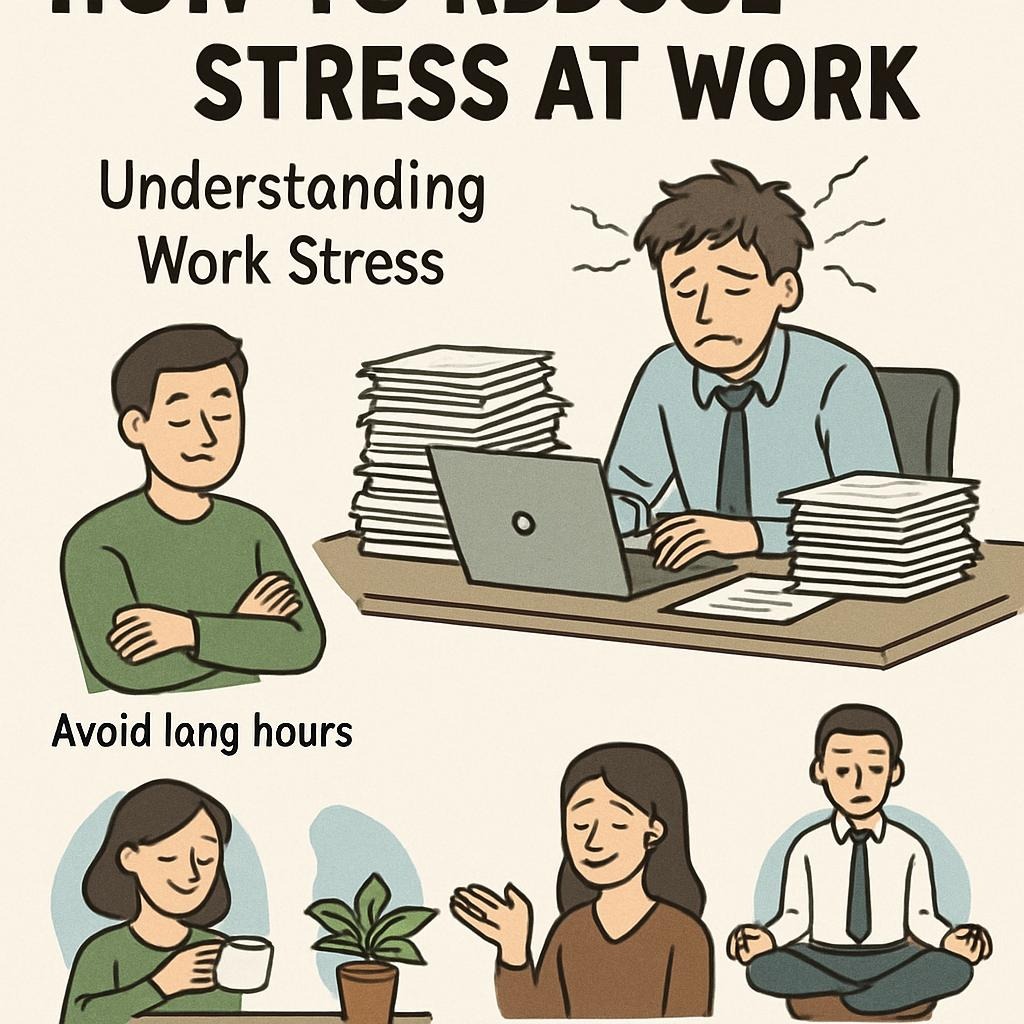
Understanding Work Stress
Before diving into solutions, it’s important to understand what causes work stress. Common sources include:
- Heavy workload: Too many tasks and unrealistic deadlines.
- Lack of control: Feeling powerless over your work or decisions.
- Unclear expectations: Not knowing what’s expected of you.
- Poor work environment: Negative relationships with colleagues or supervisors.
- Work-life imbalance: Difficulty separating work time from personal time.
Identifying your stress triggers is the first step toward managing them effectively.
Practical Tips to Reduce Stress at Work
1. Prioritize and Organize Your Tasks
Use tools like to-do lists, planners, or digital apps to keep track of your tasks. Prioritize them based on urgency and importance using strategies like the Eisenhower Matrix. Breaking down large projects into smaller, manageable steps can also make your workload less daunting.
2. Take Regular Breaks
Short breaks throughout the day help refresh your mind and prevent burnout. Even a five-minute walk or stretching session can boost your energy and focus. Consider following the Pomodoro Technique: work for 25 minutes, then take a 5-minute break.
3. Communicate Effectively
If you’re overwhelmed, don’t hesitate to talk to your supervisor or colleagues. Clear communication can help set realistic expectations, delegate tasks, or seek support. Sometimes, just sharing your concerns can reduce stress significantly.
4. Create a Comfortable Workspace
A well-organized and ergonomic workspace can improve your mood and productivity. Ensure your chair and desk support good posture, reduce clutter, and personalize your space to make it inviting.
5. Practice Mindfulness and Relaxation Techniques
Mindfulness practices such as deep breathing, meditation, or progressive muscle relaxation can reduce anxiety and improve focus. Taking a few minutes each day to center yourself can help you stay calm during stressful moments.
6. Set Boundaries
Avoid checking work emails or answering calls after hours to maintain a healthy work-life balance. Setting clear boundaries helps prevent burnout and allows you to recharge.
7. Stay Physically Active
Regular exercise is a powerful stress reliever. Even light activities like walking during lunch or stretching at your desk can improve your mood and energy levels.
8. Seek Professional Support if Needed
If stress becomes overwhelming, consider talking to a mental health professional. Many workplaces offer employee assistance programs (EAP) that provide confidential counseling services.
Conclusion
Reducing stress at work requires intentional effort and self-awareness. By organizing your tasks, taking breaks, communicating openly, and caring for your mental and physical health, you can create a more positive work experience. Remember, managing stress not only benefits your career but also enhances your overall quality of life. Start implementing these strategies today and take a proactive step towards a healthier, happier work environment.