When we marvel at a architectural wonder—a soaring skyscraper, an elegant bridge, or even a sprawling family home—our eyes are drawn to the design, the glass, the steel, the finished facade. We rarely, if ever, think about what lies beneath. Yet, the single most critical component of any structure is the one we never see: the foundation. And the foundation is only as reliable as the ground it sits on.
This is where soil testing, or geotechnical investigation, comes in. It is the process of understanding the very earth upon which we build. To skip soil testing is to build blind, gambling the structural integrity, safety, and financial investment of a project on an unknown variable.

This article is a comprehensive guide to why soil testing is not just a recommended best practice, but a non-negotiable prerequisite for any construction project. We will explore the science behind it, the risks of neglecting it, the process itself, and the long-term benefits that make it one of the most cost-effective investments a developer, engineer, or homeowner can make.
Chapter 1: What is Soil Testing and Why Does it Matter?
At its core, soil testing is the process of acquiring and analyzing soil samples from a proposed construction site. A geotechnical engineer or a specialized firm performs a series of investigations to determine the physical and chemical properties of the soil and underlying strata.
The Primary Objectives of a Geotechnical Investigation are to:
- Profile the Subsurface: Create a detailed log of the soil layers (strata), their thickness, depth, and sequence. Is there a layer of topsoil, followed by clay, then sand, then bedrock? Where is the groundwater table?
- Determine Engineering Properties: Measure key properties like bearing capacity (how much load the soil can support), shear strength (resistance to sliding), compaction, permeability (how water flows through it), and consolidation potential (how much it will settle under load).
- Assess Chemical Properties: Identify the presence of contaminants, sulfates, chlorides, or organic matter that could corrode foundations, react with concrete, or lead to unstable ground.
- Evaluate Groundwater Conditions: Locate the water table and understand its seasonal fluctuations. Water is a primary agent in soil instability.
This information culminates in a Geotechnical Report—a comprehensive document that provides actionable recommendations for foundation design, earthworks, drainage, and construction methodologies. It is the blueprint for building in the ground, complementing the architect’s blueprint for building on the ground.

Why It’s Not Just “Dirt”
The term “soil” is deceptively simple. What we walk on is a complex, heterogeneous material. Its behavior under stress and when exposed to water varies dramatically. Consider the difference between:
- Bedrock: Excellent bearing capacity, minimal settlement.
- Dense Sand and Gravel: Good load-bearing capacity and drainage.
- Soft Clay: Poor bearing capacity, prone to significant settlement over time, and highly susceptible to expansion and contraction with moisture changes.
- Fill/Uncompacted Soil: Highly variable and unpredictable, often the result of previous human activity.
Building the same foundation on each of these soil types would lead to vastly different outcomes. Soil testing removes the guesswork and provides the data needed to match the design to the ground conditions.
Chapter 2: The Perilous Path: Catastrophic Risks of Skipping Soil Testing
Foregoing a proper geotechnical investigation might seem like a way to save time and money upfront. In reality, it is a gamble with staggeringly high stakes. The history of construction failures is littered with examples where a lack of understanding of subsurface conditions was the root cause.

1. Differential Settlement: The Silent Killer of Structures
All buildings settle to some degree. The problem is not uniform settlement, but differential settlement—when different parts of a structure settle at different rates.
- The Cause: This occurs when the soil’s bearing capacity is not uniform across the site. One corner might be on firm clay, while another is on a pocket of soft, compressible soil.
- The Consequences:
- Cracks: Diagonal cracks at the corners of doors and windows, stair-step cracks in masonry, and cracks in slab-on-grade floors.
- Distortion: Doors and windows that stick or won’t close, sloping floors, and visible tilting of walls.
- Structural Failure: In extreme cases, differential settlement can lead to the partial or total collapse of a structure.
Case Study: The Leaning Tower of Pisa
The most famous example of differential settlement in the world. Built on a dense clay layer overlaying a softer clay and sand stratum, the foundation began to sink unevenly during construction itself. The soil on one side compressed more than the other, causing the famous tilt. Billions have been spent on engineering solutions to stabilize it—a cost that could have been avoided with modern soil mechanics.
2. Foundation Failure
The foundation is the intermediary that transfers the building’s load to the soil. If the soil cannot support the load, or if the foundation is improperly designed for the soil type, it will fail.
- Bearing Capacity Failure: The soil literally gives way, causing the structure to sink or tip. This is often sudden and catastrophic.
- Foundation Heave: In soils with high clay content (expansive soils), the clay absorbs water and expands, exerting tremendous upward pressure on the foundation. This can lift and crack slabs, footers, and basement walls. When the clay dries, it shrinks, causing the foundation to drop.
- Frost Heave: In cold climates, water in the soil freezes and forms ice lenses that expand upward. A properly designed foundation must be placed below the frost line to prevent this.
3. Landslides and Slope Instability
Building on or near a slope without understanding the soil’s shear strength is a recipe for disaster. A landslide can be triggered by the added load of a new structure, changes in drainage patterns, or saturation from heavy rain. Soil testing identifies weak layers that could become failure planes, allowing engineers to design retaining walls, drainage systems, or deep foundations to secure the slope.
4. Water Damage and Basement Flooding
An improperly assessed water table can lead to chronic basement flooding, hydrostatic pressure on basement walls, and a damp, mold-prone environment. Soil testing determines the depth to groundwater and the soil’s permeability, informing the design of effective drainage and waterproofing systems.
5. Construction Delays and Astronomical Cost Overtuns
Discovering a hidden layer of peat or an underground spring during construction can bring a project to a grinding halt. The “savings” from skipping the soil test are instantly obliterated by:
- Emergency redesign of foundations.
- Costly earthworks and soil remediation.
- Equipment downtime and labor costs while the problem is solved.
- Legal disputes between the owner, contractor, and engineer.
A soil test is a form of insurance against these unpredictable and budget-busting surprises.
Chapter 3: The Soil Testing Process: From Field to Report
A geotechnical investigation is a systematic process tailored to the scale and complexity of the project. A investigation for a single-family home will be less intensive than one for a high-rise or a dam, but the principles remain the same.
Phase 1: Desk Study and Site Reconnaissance
Before any equipment arrives, the geotechnical engineer conducts preliminary research.
- Desk Study: Reviewing historical maps, geological surveys, aerial photographs, and previous site records to understand the area’s general geology and any past uses (e.g., old landfills, quarries, water bodies).
- Site Walkover: A visual inspection of the site to observe the current topography, drainage patterns, evidence of erosion, existing vegetation, and any signs of previous construction or fill.
Phase 2: Field Investigation and Sampling
This is the hands-on phase of data collection.
- Test Borings: The most common method. A drill rig is brought to the site to bore holes to a specified depth (often to bedrock or a predetermined refusal point). Soil samples are extracted at regular intervals.
- Disturbed Samples: Used for classification and laboratory tests like grain size analysis and moisture content. The soil’s natural structure is destroyed during collection.
- Undisturbed Samples: Carefully taken using specialized tubes to preserve the soil’s in-situ structure and stress conditions. These are crucial for strength and consolidation tests.
- Test Pits: For shallow investigations, excavating a pit with a backhoe allows engineers to visually inspect a large section of the soil profile and take block samples. This is common for residential projects and utility lines.
- In-Situ Testing: Some tests are performed directly in the borehole.
- Standard Penetration Test (SPT): A hammer drives a split-spoon sampler into the soil at the bottom of the borehole. The number of blows required to drive the sampler a certain distance provides a measure of soil density and strength.
- Cone Penetration Test (CPT): A cone-shaped tip is pushed into the ground at a constant rate, continuously measuring the resistance. It provides a detailed, continuous profile of soil types and strength.
Phase 3: Laboratory Testing
The collected samples are transported to a geotechnical laboratory for precise analysis. Key tests include:
- Grain Size Analysis: Sieving and hydrometer tests to determine the distribution of gravel, sand, silt, and clay particles. This is the first step in soil classification.
- Afterberg Limits: These tests (Liquid Limit, Plastic Limit, Shrinkage Limit) determine the water content at which a fine-grained soil changes from a plastic to a liquid state. They are critical for understanding the behavior of clays.
- Moisture Content: A simple but vital test measuring the amount of water in the soil sample.
- Proctor Compaction Test: Determines the optimal moisture content at which a soil can achieve its maximum density through compaction. This is essential for specifying compaction requirements for backfill and embankments.
- Consolidation Test: Measures how much a saturated clay layer will compress and how long it will take when subjected to a load. This predicts long-term settlement.
- Direct Shear Test or Triaxial Test: These measure the shear strength of the soil—its resistance to sliding along internal planes.
- Chemical Tests: To determine pH, organic content, and the concentration of sulfates and chlorides that can attack concrete and steel.
Phase 4: Analysis and Report Writing
The geotechnical engineer synthesizes all the field and laboratory data to create the final report. A typical report includes:
- Introduction: Project description and scope of services.
- Site Conditions and Methodology: Description of the site and the investigation methods used.
- Subsurface Profile: Detailed logs of all boreholes and a cross-sectional diagram of the subsurface strata.
- Discussion of Laboratory Results: A presentation and interpretation of all test data.
- Analysis and Recommendations: The core of the report. This section provides:
- Allowable Bearing Capacity for different foundation types.
- Expected Total and Differential Settlement estimates.
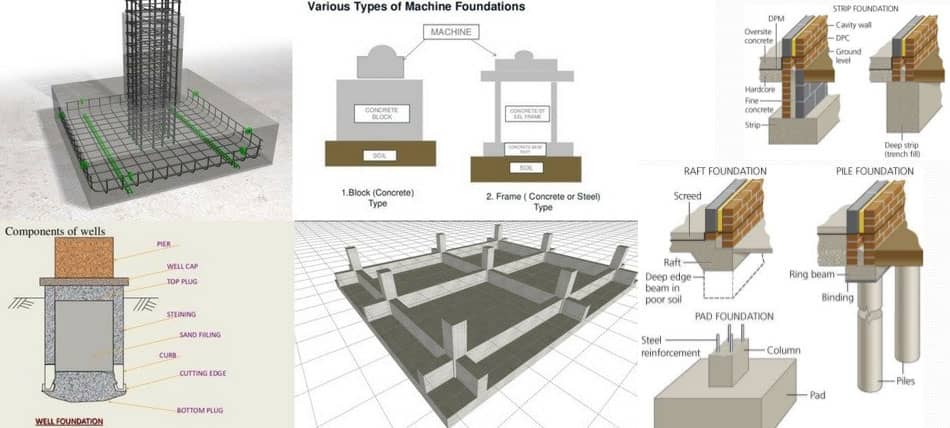
- Recommendations for Foundation Type: e.g., shallow spread footings, mat foundation, deep piles or caissons.
- Recommendations for Excavation and Sloping: Safe slopes for temporary trenches.
- Drainage and Waterproofing Recommendations.
- Guidance on Soil Compaction for backfill.
- Conclusions: A summary of the critical findings and constraints.
This report becomes a foundational document for the structural engineer, the architect, and the contractor.
Chapter 4: The Financial Wisdom: Soil Testing as an Investment, Not a Cost
It’s a common misconception that soil testing is an unnecessary expense. Let’s reframe this perspective entirely.
Cost of Soil Testing vs. Cost of Failure
The cost of a basic geotechnical investigation for a single-family home typically ranges from $1,000 to $5,000, depending on location and site complexity. For a large commercial project, it might be 0.1% to 0.5% of the total project cost.
Now, compare this to the costs of remediation for a foundation problem:
- Underpinning/Re-leveling a House: $10,000 – $40,000+
- Replacing a Failed Septic System due to poor drainage: $10,000 – $25,000+
- Repairing chronic water intrusion and mold remediation: $5,000 – $15,000+
- Legal fees and potential devaluation of the property: Incalculable.
The soil test cost is a tiny fraction of the potential downside. It is one of the highest-return investments in the entire construction budget.
Value Engineering: Optimizing the Design
A geotechnical report doesn’t just prevent problems; it often reveals opportunities for savings.
- Right-Sizing Foundations: An engineer might over-design a foundation out of caution if soil data is unavailable. The soil test provides precise data, allowing for a foundation that is safe and adequate, but not unnecessarily large or expensive. It can prevent “over-building.”
- Identifying Suitable Local Materials: The report might indicate that on-site soils can be reused as compacted fill, saving on the cost of importing expensive select fill material.
- Informing Construction Sequencing: Understanding groundwater conditions can lead to better dewatering plans, avoiding delays and cost overruns.
Chapter 5: Soil Testing for Different Project Types
The scope and focus of a geotechnical investigation vary with the project.
1. Residential Construction (New Homes & Additions)
- Focus: Bearing capacity for footings, potential for settlement, soil drainage around the foundation, and identification of expansive soils.
- Typical Method: A few test borings or test pits around the proposed foundation perimeter.
- Key Benefit: Prevents costly cracks, sticking doors, and basement moisture problems that plague many homeowners.
2. Commercial and High-Rise Buildings
- Focus: High bearing capacity for immense loads, deep settlement analysis, lateral earth pressure for deep basements, and dynamic load analysis for seismic or wind forces.
- Typical Method: Multiple deep boreholes, often with SPT and sophisticated lab testing. May include geophysical methods.
- Key Benefit: Ensures the safety and long-term stability of a massive public and private investment.
3. Infrastructure Projects (Roads, Bridges, Dams)
- Focus: Long-term stability of embankments, settlement of roadways, strength of subgrade for pavement design, and seepage control for dams.
- Typical Method: Extensive borings along the proposed alignment, in-situ testing like CPT for continuous profiling, and specialized tests for permeability.
- Key Benefit: Prevents pavement rutting, bridge approach settlement, and catastrophic dam failures.
4. Specialized Applications
- Seismic Zones: Liquefaction potential analysis, where saturated sandy soils can lose strength during an earthquake.
- Brownfield Sites: Heavy focus on chemical testing for soil and groundwater contamination.
- Agricultural Buildings: While often lighter, these structures require attention to drainage and chemical resistance for manure and silage.
Chapter 6: Beyond the Initial Test: The Role of Monitoring
For some complex projects, soil testing doesn’t end with the pre-construction report. Geotechnical monitoring continues during and after construction to verify design assumptions and ensure safety.
- Settlement Points: Precise measurements of how much and how fast a structure is settling.
- Inclinometers: Measure lateral movement within a slope or retaining wall.
- Piezometers: Monitor groundwater levels and pore water pressures.
This real-time data provides an early warning system, allowing engineers to take corrective action if movements exceed predictions.
Conclusion: Building on a Bedrock of Knowledge
A construction project is a complex symphony of design, materials, and labor. But this symphony is performed on a stage whose properties are unknown without a proper geotechnical investigation. Soil testing is the process of tuning that stage, ensuring it is solid, stable, and predictable.
It is the difference between building on a known, engineered foundation and building on a hope and a prayer. It transforms the “unseen” from a source of fear and uncertainty into a source of confidence and strength.
For the homeowner, it is peace of mind. For the developer, it is risk management. For the engineer and architect, it is the essential data needed to bring their vision safely to life. For the contractor, it is a roadmap that prevents costly surprises.
Before you break ground on your next project—whether it’s a dream home or a commercial complex—make the smartest first move possible. Invest in a comprehensive soil test. It is the foundational step to ensuring that what you build will stand the test of time.