When Squid Game exploded onto the global stage, it did more than just break viewership records; it tapped into a universal “internal angst” regarding modern economic systems. Directed by Hwang Dong-hyuk, the series uses the colorful, nostalgic imagery of childhood to mask a cold, clinical examination of human desperation.
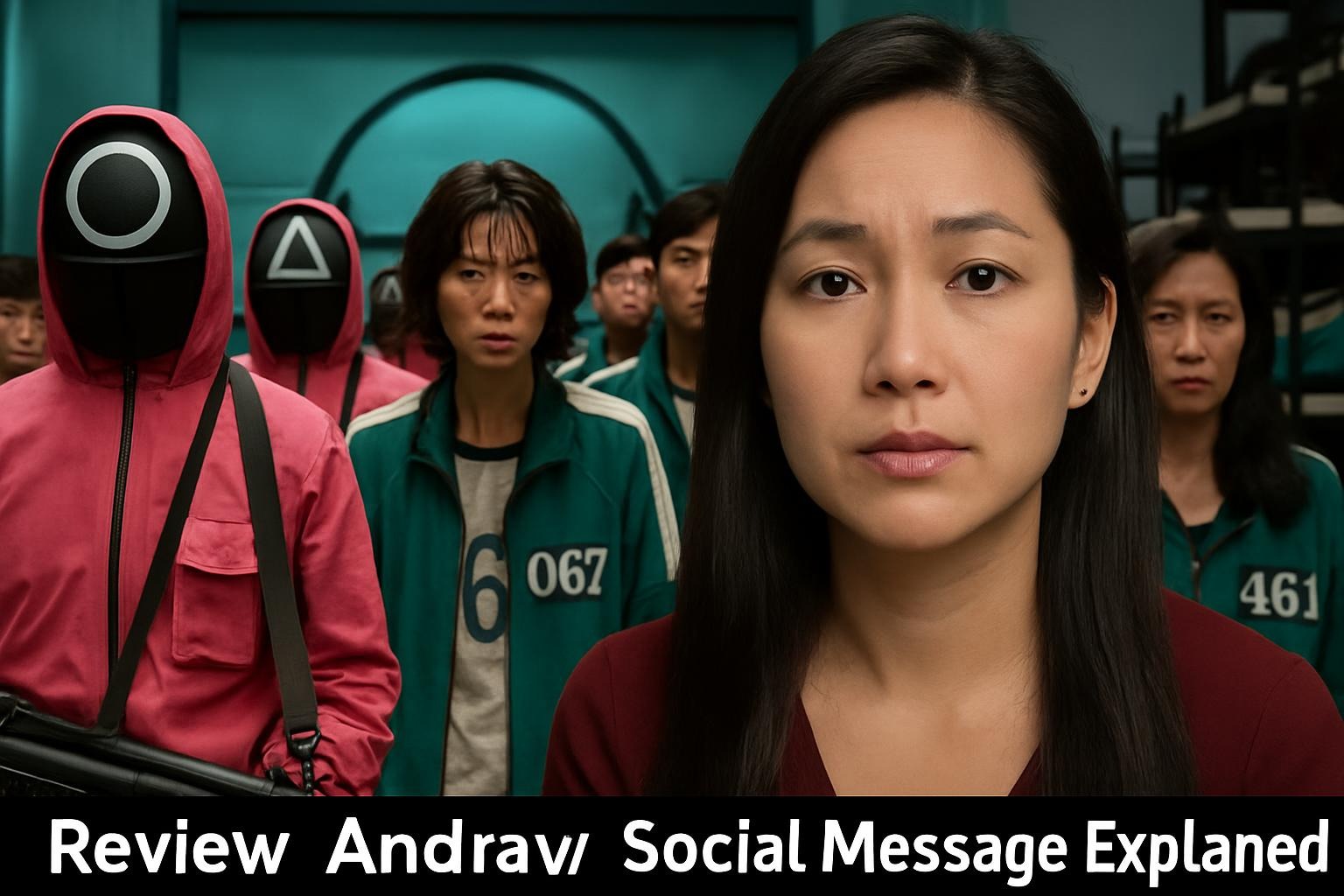
By 2025, the series remains a cornerstone of social commentary, particularly as global discussions around household debt, youth unemployment, and the “meritocracy myth” continue to intensify.
Part 1: The Narrative Concept – High Stakes, Low Value
The premise is deceptively simple: 456 players, all drowning in insurmountable debt, are invited to play six traditional Korean children’s games over six days. The winner receives 45.6 billion KRW (roughly $35 million USD). The losers, however, are “eliminated”—a corporate euphemism for immediate execution.
The “Hell” of Choice
One of the show’s most poignant narrative turns occurs in Episode 2, titled “Hell.” After witnessing a massacre in the first game, the players vote to leave. However, upon returning to their real lives, they find that the “real world” is just as ruthless, if not more so, than the game.
- In the game: You might die, but you are fed and treated as an “equal” player.
- In reality: You are invisible, hunted by loan sharks, and slowly dying from the weight of your choices.
The fact that 93% of the players voluntarily return to the island is the show’s most damning critique: for the marginalized, a 1-in-456 chance at wealth is better than a 100% chance of poverty.
Part 2: Deep Social Commentary – Decoding the Symbols
Squid Game is an allegory for Capitalist Hell. Every visual and narrative choice serves a deeper meaning:
1. The Illusion of Fairness (Meritocracy)
The Front Man repeatedly insists the game is “fair” because everyone plays under the same rules. However, the games often favor specific traits—strength in Tug-of-War or pure luck in the Glass Bridge. This mirrors real-world capitalism, which claims to be a meritocracy while ignoring the systemic disadvantages (age, gender, background) that make the “playing field” inherently uneven.
2. The Monetization of Human Life
The giant glass piggy bank hanging from the ceiling, filling with cash every time a player dies, is a literal representation of “accumulation by dispossession.” It visualizes a world where one person’s wealth is directly built on the literal corpses of others.
3. The VIPs: The Voyeurism of the Elite
The masked VIPs, who bet on players like racehorses, represent the global elite. To them, the struggle for survival is merely a “game” to alleviate their boredom. Their presence shifts the show from a survival thriller to a critique of the spectacle, reminding the audience that we, too, are watching for entertainment.
Part 3: Character Archetypes – Faces of the Debt Crisis
| Character | Social Representation |
| Seong Gi-hun (456) | The “Average Joe” pushed to the brink by gambling, unemployment, and a failing social safety net. He represents the remains of humanity in a dog-eat-dog world. |
| Cho Sang-woo (218) | The “Success Story.” A SNU graduate who fell from grace. He represents the ruthless logic of capitalism—willing to sacrifice friends to protect his “investment.” |
| Kang Sae-byeok (067) | The Outsider. A North Korean defector who realized that the “Capitalist Dream” in the South is just as oppressive as the regime she fled. |
| Ali Abdul (199) | The Exploited Laborer. An undocumented immigrant whose kindness is weaponized against him, symbolizing how the system feeds on the most vulnerable. |
Part 4: Life Lessons & Takeaways for 2025
While the violence is extreme, the lessons Squid Game imparts are grounded in harsh reality:
- The Debt Trap is a Modern Slavery: The show highlights how debt strips away agency. When your worth is synonymous with your bank balance, you lose the “right” to say no.
- The Fragility of “Gganbu” (Friendship): The marble game episode remains one of TV’s most heartbreaking hours. it teaches that in a resource-scarce environment, even the strongest bonds are tested by the “zero-sum” nature of survival.
- Hope as a Resistance: Gi-hun’s refusal to use his prize money for a year and his final decision to turn back from the airport suggests that the only way to “win” the game is to stop playing by its rules and start dismantling the system itself.
Final Review: Why It Still Trends
Squid Game is a 10/10 cultural landmark. It succeeded because it didn’t just show blood; it showed the logic behind the blood. It forces the viewer to ask: “If I were at my absolute lowest, would I pick up the card?”
It is a masterclass in tension, production design (the M.C. Escher-inspired stairs), and emotional resonance. It remains the gold standard for how to package a radical social message inside a binge-worthy thriller.
Would you like me to compare the social messages of Squid Game with Parasite, or perhaps provide a breakdown of the specific Korean childhood games used in the series?