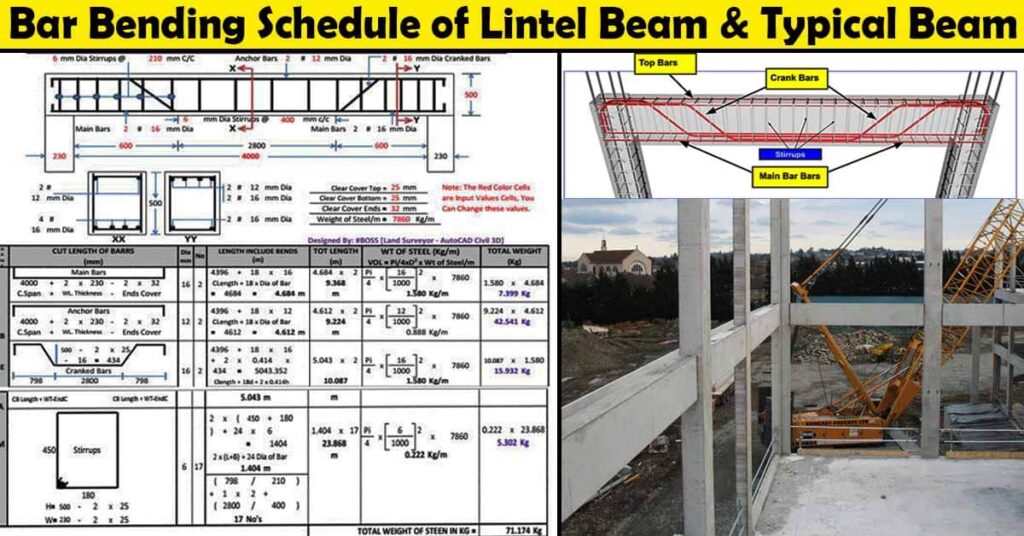
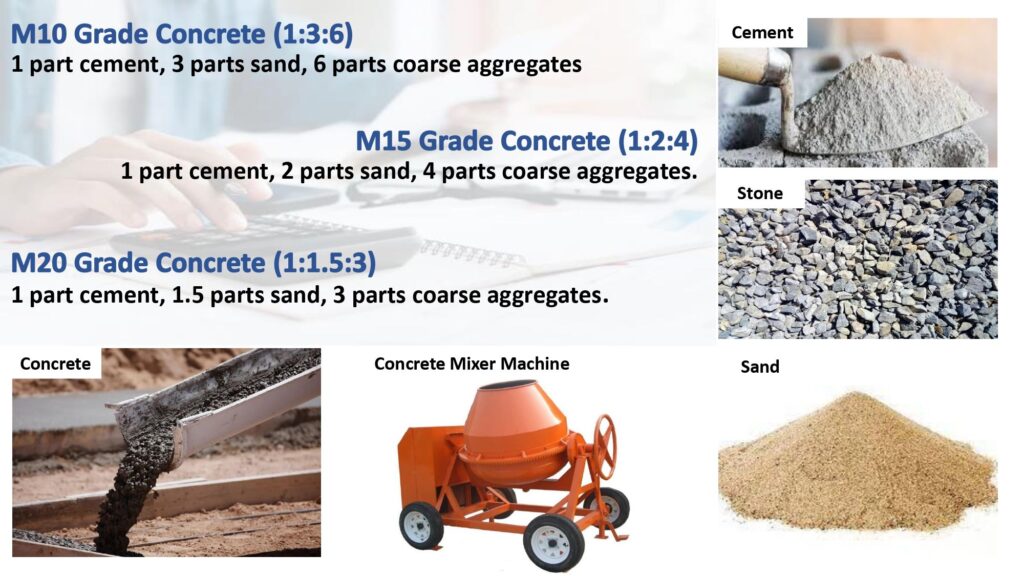
Building a strong and durable structure begins with a solid foundation. Foundations are critical to the stability, safety, and longevity of any building, whether it’s a small residential home or a large commercial complex. They transfer the weight of the building to the ground, prevent settling, and protect against environmental factors such as moisture, frost, and seismic activity.
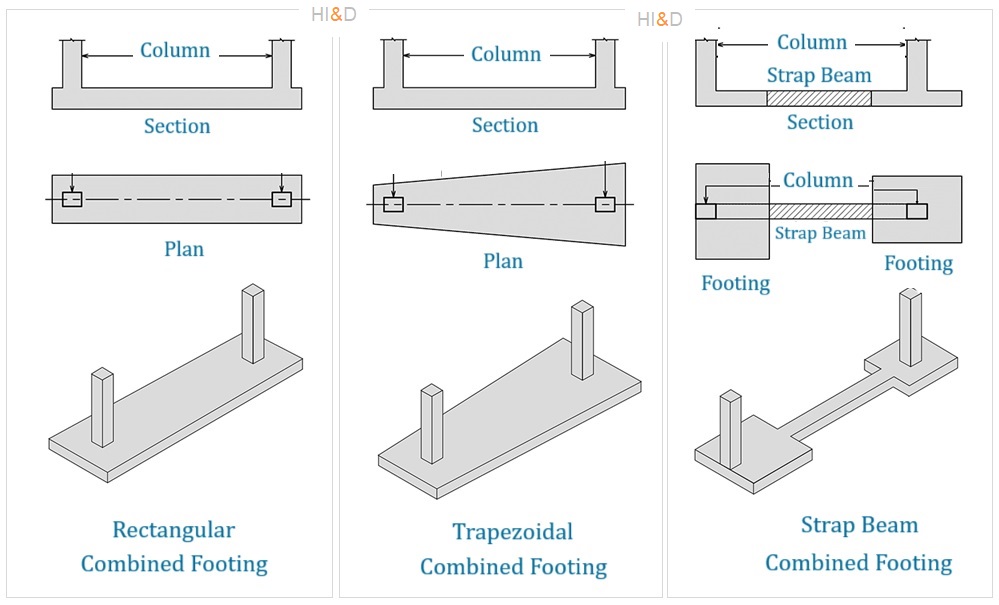
In this comprehensive guide, we will explore everything you need to know about building foundations. From the basic concepts and importance of foundations to the various types, materials used, design considerations, and construction techniques — this post covers it all.
Table of Contents
- Introduction to Building Foundations
- Importance of a Good Foundation
- Factors Influencing Foundation Choice
- Common Types of Building Foundations
- Shallow Foundations
- Deep Foundations
- Detailed Overview of Shallow Foundation Types
- Strip Foundations
- Spread Footings
- Raft Foundations
- Slab-on-Grade Foundations
- Detailed Overview of Deep Foundation Types
- Pile Foundations
- Caisson Foundations
- Pier Foundations
- Materials Used in Foundations
- Design Considerations for Foundations
- Construction Process of Foundations
- Common Problems and Solutions in Foundations
- Innovations and Future Trends in Foundation Technology
- Conclusion
1. Introduction to Building Foundations
A foundation is the lowest part of a building structure that transfers the load to the ground. It provides a stable base for the superstructure and ensures that the building remains upright and safe throughout its life cycle.
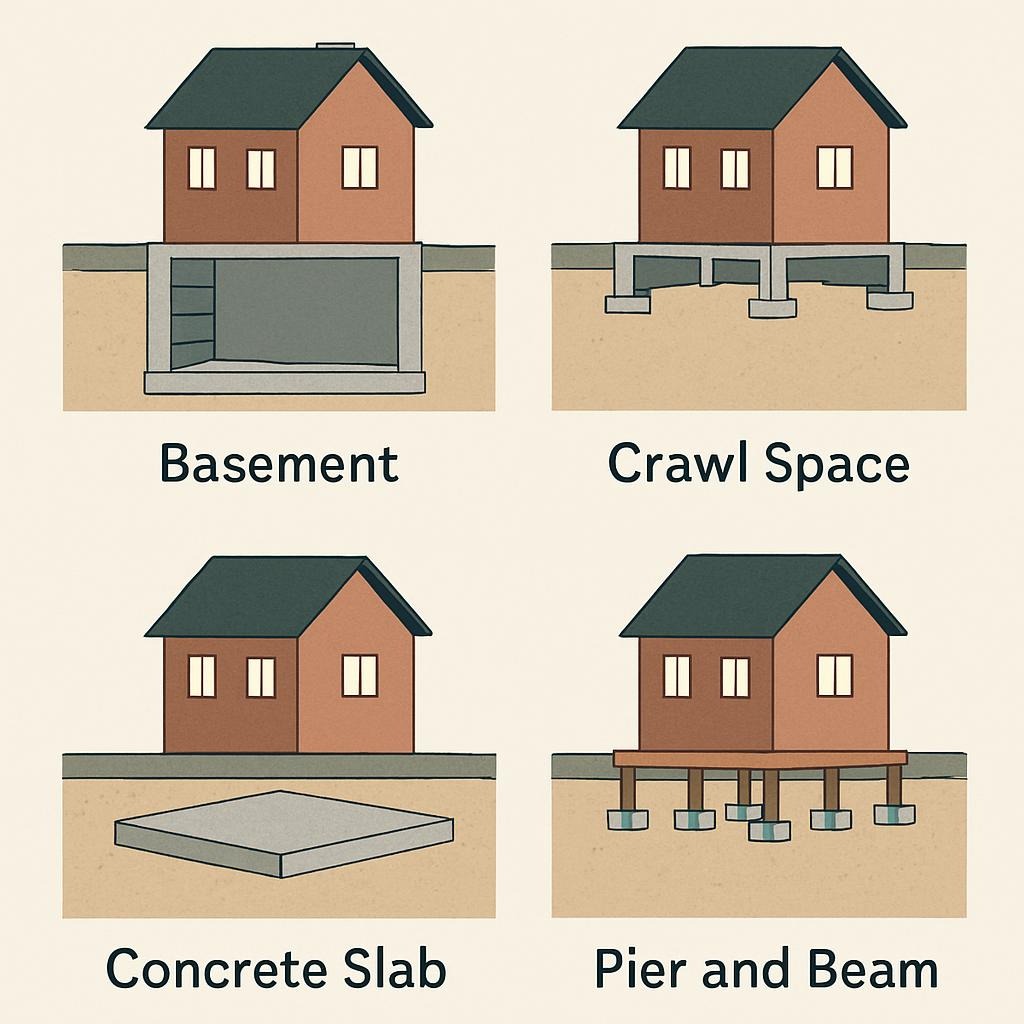
Foundations must resist various forces including:
- Vertical loads from the weight of the building and its contents
- Lateral forces such as wind and earthquakes
- Uplift forces caused by soil expansion or water pressure
The type and design of the foundation depend on the soil conditions, load requirements, building type, and environmental factors.
2. Importance of a Good Foundation
The foundation is often called the “heart” of a building because it supports everything else. A well-designed and properly constructed foundation ensures:
- Structural Stability: Prevents uneven settling or shifting that can cause cracks or collapse.
- Load Distribution: Distributes building loads evenly over a large area so the soil can safely bear it.
- Moisture Protection: Acts as a barrier against moisture from the ground which can damage the structure.
- Resistance to Environmental Forces: Helps structures withstand earthquakes, floods, frost and soil movement.
- Longevity: A strong foundation extends the life of the building.
Ignoring foundation quality or choosing the wrong type can lead to expensive repairs or even catastrophic failure.
3. Factors Influencing Foundation Choice
Selecting the right foundation depends on multiple factors:
- Soil Type and Bearing Capacity: Different soils have different load-bearing capacities (e.g., rock vs clay vs sand). This dictates how deep or wide the foundation must be.
- Type of Structure: Heavier buildings require stronger foundations. High-rise buildings usually need deep foundations.
- Wind, Seismic, and Environmental Loads: Areas prone to earthquakes or high winds need foundations designed to resist lateral forces.
- Water Table Level: High water tables require waterproof foundations or special drainage.
- Frost Line Depth: In cold climates, foundations must extend below the frost line to prevent frost heave.
- Budget and Time Constraints: Some foundation types are more expensive or time-consuming.
- Local Building Codes and Regulations: Must comply with legal requirements.
4. Common Types of Building Foundations
Foundations are broadly classified into two categories based on their depth relative to the ground surface:
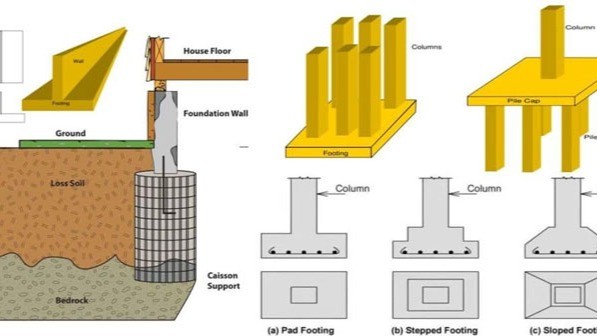
Shallow Foundations
These are placed near the surface of the earth or transfer loads to soil close to the surface. Suitable when the soil near the surface has sufficient bearing capacity.
Deep Foundations
These extend deep into the ground to transfer loads to stronger soil or rock located at greater depths. Used when surface soils are weak or for heavy structures.
5. Detailed Overview of Shallow Foundation Types
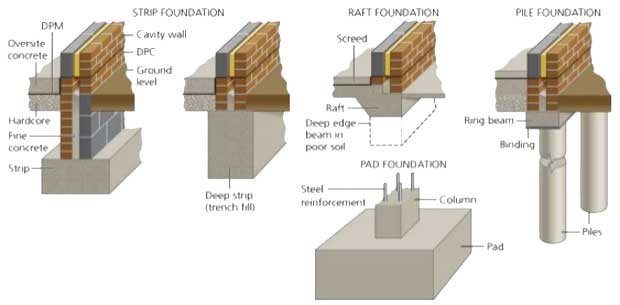
5.1 Strip Foundations
- Continuous strips of concrete that support load-bearing walls.
- Typically 500mm to 1m wide.
- Used for residential and small commercial buildings.
- Suitable for soils with good bearing capacity near the surface.
- Easy and economical to construct.
5.2 Spread Footings (Isolated Footings)
- Individual footings placed under columns to spread the load.
- Square or rectangular pads of concrete.
- Used when columns are spaced apart.
- Designed based on load and soil bearing capacity.
- Often reinforced for added strength.
5.3 Raft Foundations (Mat Foundations)
- Large concrete slab covering the entire footprint of the building.
- Distributes load over a large area.
- Used when soil bearing capacity is low or loads are heavy.
- Prevents differential settlement.
- Common for commercial buildings, warehouses, and basements.
5.4 Slab-on-Grade Foundations
- Concrete slab poured directly on the ground.
- Reinforced with steel mesh or bars.
- Suitable for warm climates where frost isn’t a concern.
- Acts as both foundation and floor.
- Quick and economical.
6. Detailed Overview of Deep Foundation Types
6.1 Pile Foundations
- Long, slender columns made of concrete, steel, or timber driven deep into the ground.
- Transfer loads to deep strong soil or rock.
- Used for heavy structures or weak surface soils.
- Types include driven piles, bored piles, and screw piles.
- Can resist vertical and lateral loads.
6.2 Caisson Foundations (Drilled Shafts)
- Large diameter concrete shafts drilled into the ground.
- Suitable for underwater or deep foundation needs.
- Constructed by excavating soil and filling with reinforced concrete.
- Used for bridges, piers, and tall buildings.
6.3 Pier Foundations
- Cylindrical columns cast in drilled holes.
- Similar to caissons but smaller in diameter.
- Transfer load to firm strata below.
- Common for residential and light commercial buildings.
7. Materials Used in Foundations
- Concrete: Most common foundation material due to strength, durability, and versatility.
- Steel: Used for reinforcement and in piles.
- Timber: Sometimes used for temporary or light-load foundations.
- Masonry: Stone or brick used in older foundations.
- Composite Materials: Modern foundations may use polymer or fiber composites for specific applications.
8. Design Considerations for Foundations
- Load Calculations: Determining dead, live, wind, seismic loads.
- Soil Analysis: Geotechnical investigation to assess soil type, bearing capacity, water table.
- Settlement Analysis: Ensuring minimal or uniform settlement.
- Frost Protection: Depth to prevent frost heave.
- Drainage: To prevent water accumulation around foundation.
- Reinforcement Detailing: Steel placement for tensile strength.
- Durability: Protection against corrosion, chemical attack.
- Building Code Compliance: Following local standards and regulations.
9. Construction Process of Foundations
- Site Preparation: Clearing, leveling, and excavation.
- Soil Treatment: Compaction, stabilization if needed.
- Formwork Installation: Creating molds for concrete.
- Reinforcement Placement: Installing steel bars.
- Pouring Concrete: Casting and curing.
- Waterproofing and Drainage: Applying membranes and drainage layers.
- Backfilling: Filling excavated areas after foundation sets.
- Inspection: Ensuring quality and compliance.
10. Common Problems and Solutions in Foundations
- Settlement and Cracking: Caused by uneven soil compaction or overload. Solution: improve soil or use deeper foundations.
- Water Ingress: Leads to dampness and weakening. Solution: waterproofing and drainage.
- Frost Heave: Soil expansion causing lifting. Solution: foundation below frost line or insulation.
- Corrosion of Steel: Weakens reinforcement. Solution: use coated steel or additives.
- Soil Erosion: Undermines foundation. Solution: proper grading and drainage.
11. Innovations and Future Trends in Foundation Technology
- Geopolymer Concrete: Environmentally friendly alternative to traditional cement.
- Smart Foundations: Embedded sensors for real-time monitoring.
- Prefabricated Foundations: Modular systems for faster construction.
- Improved Soil Stabilization: Using nanomaterials and chemical treatments.
- Sustainable Design: Minimizing environmental impact with recycled materials.
12. Conclusion
The foundation is a fundamental component that ensures the safety, durability, and performance of any building. Understanding the various types of foundations, their applications, materials, and design considerations is essential for architects, engineers, builders, and even homeowners.
Choosing the right foundation involves careful assessment of soil conditions, loads, environmental factors, and budget. With advances in technology and materials, foundation construction continues to evolve, promising stronger, smarter, and more sustainable buildings.
Whether you are planning a small home or a large commercial project, this guide provides the knowledge foundation to make informed decisions and build structures that stand the test of time.
Thank you for reading The Complete Guide to Types of Building Foundations. Feel free to share your experiences or questions in the comments below!