Our in-depth 12 Angry Men review explores how one room, twelve characters, and a broken fan created the most suspenseful courtroom drama ever made. Discover why it remains essential viewing.
Introduction: The Boldest Debut in Cinema History
Imagine pitching a movie in 1957. The studio executives lean forward, expecting gunfights, car chases, or sweeping Western landscapes. Instead, you tell them: “The entire film takes place in one room. Twelve men sit around a table. They talk. That’s it. For 96 minutes.”
They would have laughed you out of the building.
But Sidney Lumet did precisely that with his directorial debut, 12 Angry Men. And against every odd, he created one of the most suspenseful, emotionally devastating, and intellectually rewarding films ever made. Based on Reginald Rose’s teleplay, this black-and-white chamber piece became an instant classic—and six decades later, it hasn’t aged a day.
In this 12 Angry Men review, we’ll examine why a movie about a jury deliberating a murder case remains a masterclass in tension, character, and moral courage—and why you need to watch it immediately.
The Setup: A Life in Their Hands
The premise is deceptively simple. A young Puerto Rican teenager stands accused of stabbing his father to death. The evidence seems overwhelming: a murder weapon identical to one he purchased, eyewitness testimony from an old man living downstairs, and a woman across the street who claims she saw the murder through passing elevated train windows.
The jury retires to deliberate. Eleven men vote “guilty” without hesitation. But one man—Juror No. 8 (Henry Fonda)—casts a “not guilty” vote. He isn’t certain the boy is innocent. He simply wants to talk. He wants to examine the evidence before sending a human being to the electric chair.
What follows is a step-by-step dismantling of everything the court presented as fact. The switchblade, they realize, isn’t unique—it’s a common model available at any corner store. The old man couldn’t possibly have seen what he claimed, given his physical limitations. The woman’s testimony collapses under scrutiny about eyesight and train noise.
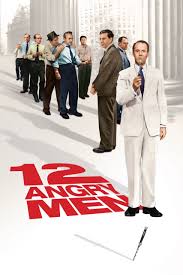
What makes 12 Angry Men extraordinary is that we never leave the jury room. There are no flashbacks to the crime. No shots of the boy’s face. No courtroom theatrics. Everything we learn comes filtered through the jurors’ memories and assumptions—as fallible and human as the men themselves.
The Cast: Twelve Flawless Performances
A movie with twelve leads and no single protagonist requires actors who can hold their own while serving the ensemble. 12 Angry Men boasts one of the greatest casts ever assembled, and every single performer delivers.
The Key Jurors:
- Juror No. 8 (Henry Fonda): The moral center. Fonda plays him not as a hero but as a decent, patient man troubled by easy answers. He never claims the boy is innocent—only that the evidence deserves scrutiny. It’s a performance of quiet integrity.
- Juror No. 3 (Lee J. Cobb): The antagonist. Cobb is a volcano of rage, sweat, and unresolved pain. His son ran away from home years ago, and he’s been trying to punish the boy ever since. When he finally breaks down, sobbing, “Not guilty,” it’s one of cinema’s most devastating emotional releases.
- Juror No. 10 (Ed Begley): The bigot. His venomous rant about “those people” is intentionally uncomfortable—a raw display of prejudice that causes the other jurors to physically turn their backs on him. It’s the film’s most pointed condemnation of racism.
- Juror No. 11 (George Voskovec): The immigrant watchmaker. He understands the weight of justice better than any native-born American in the room. His speech about the sacredness of reasonable doubt is the film’s thesis statement.
- Juror No. 9 (Joseph Sweeney): The elderly observer. As the first to join Fonda’s cause, he represents wisdom earned through a lifetime of watching human folly. His insights about the key witness—an old man desperate for attention—are heartbreaking and brilliant.
The remaining jurors are equally memorable: the nervous banker (No. 2), the slum-raised juror who understands the defendant’s world (No. 5), the salesman obsessed with baseball tickets (No. 7), the coolly logical stockbroker (No. 4), and the advertising man who can’t commit to anything (No. 12).
Not a single performance is wasted. Not a single character is superfluous.
Lumet’s Invisible Direction: How Cameras Create Claustrophobia
Sidney Lumet had never directed a feature film before 12 Angry Men. He had, however, directed hundreds of live television dramas—which meant he knew exactly how to stage actors in a confined space.
What he did with the camera is pure genius. And it’s almost invisible.
Lumet developed what he called a “lens plot.” As the film progresses, the room visually shrinks around the characters, mirroring their increasing tension and frustration.
The Technical Breakdown:
- First third: Shot from above eye level with wide-angle lenses. The characters are small in the frame, finding their footing. Walls and ceilings are barely visible. We feel like observers.
- Second third: Shot at eye level. The walls begin appearing. The room feels smaller. We’re now inside the argument with them.
- Final third: Shot from below eye level. The ceiling appears in the frame for the first time. The walls close in. The room has become a pressure cooker about to explode.
The editing follows a similar pattern. Half of the film’s cuts occur in the last twenty minutes. Early scenes use longer takes, giving the actors room to establish their characters. As tensions escalate, the cutting becomes faster, more frantic.
And then there’s the heat. The jurors constantly complain about the sweltering temperature. They sweat through their shirts. They loosen ties. They strip off jackets. The broken fan sits uselessly in the corner. By the end, everyone looks physically exhausted—because they are. The heat becomes a character in itself.
All of this happens without the average viewer noticing a single cut or lens choice. That’s the mark of a master.
The Heart of the Film: Reasonable Doubt
At its core, 12 Angry Men is not a mystery about who killed the father. We never learn the truth. The film’s final shot shows Juror No. 8 helping Juror No. 3 with his coat—and then we’re done. The boy may be guilty. He may be innocent. That’s not the point.
The point is the deliberation itself.
Reginald Rose’s screenplay argues that democracy isn’t automatic. It’s hard work. It requires citizens who will sit in a sweltering room, examine evidence, confront their own prejudices, and change their minds when presented with new information.
Consider Juror No. 10. He screams about “those people” and their “breeding.” He wants to convict based on racism alone. But the other jurors don’t argue with him—they turn their backs. They refuse to engage. The silent rejection of bigotry is more powerful than any counter-argument.
Consider Juror No. 3. His entire case against the boy rests on his own pain. When he finally screams, “I’ll kill him!” during a reenactment of the stabbing, he realizes he’s no different from the defendant he condemns. His breakdown is the film’s emotional climax.
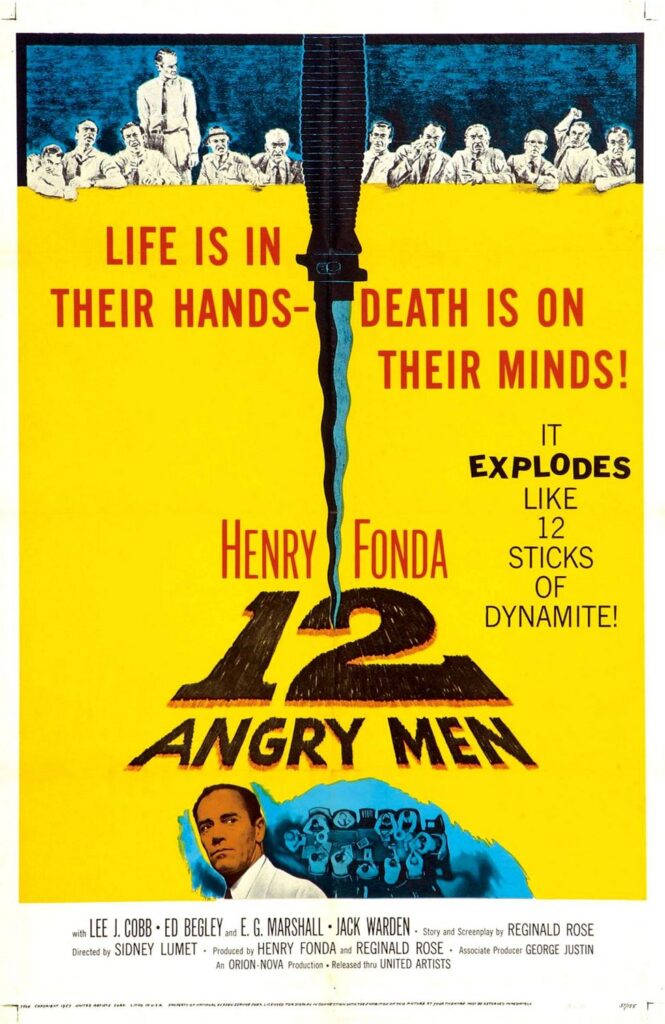
12 Angry Men doesn’t pretend that justice is easy. It shows how hard it is—and why it’s worth fighting for.
The Legacy: Why It Matters More Than Ever
12 Angry Men was not a box office success upon release. Audiences in 1957 wanted color spectacles, not black-and-white talkfests about jury duty. It took years for the film to find its audience.
Today, it’s recognized as one of the greatest films ever made. The National Film Registry selected it for preservation. The American Film Institute ranks it among the top 20 thrillers of all time. On Metacritic, it holds a near-perfect 97/100 score.
And its relevance has only grown.
In an era of political polarization, social media echo chambers, and declining trust in institutions, 12 Angry Men offers a radical proposition: reasonable people can disagree, examine evidence together, and reach consensus through dialogue .
The film doesn’t pretend this is easy. Men lie. Men bully. Men cling to their prejudices with white-knuckled fury. But it insists that the struggle is worthwhile.
As Juror No. 11 says: “We have a reasonable doubt. That’s something that’s very valuable in our system. No matter what his color or his religion, we owe him that”.
Final Verdict: An Undisputed Masterpiece
Rating: ★★★★★ (10/10)
Best Performance: Henry Fonda and Lee J. Cobb (impossible to choose)
Best Scene: Juror No. 3’s breakdown in the final minutes
Who Should Watch It: Everyone. Literally everyone. This film should be required viewing for every citizen of every democracy.
Where It Ranks: Among the top 10 films of the 1950s. Among the top 20 films of all time. At the very top of courtroom dramas.
Conclusion
12 Angry Men review articles often focus on the acting or the script—and rightfully so. But what makes this film immortal is its faith in human decency. Not blind faith. Not naive optimism. A hard-won belief that ordinary people, forced to confront their own failings, can rise to the occasion.
The jury enters the room as individuals. They exit as something resembling a community. They don’t all become friends. They don’t all agree on anything else. But they fulfilled their duty—and that’s enough.
Sixty-five years later, that lesson has never been more urgent.
Frequently Asked Questions (FAQ)
Is 12 Angry Men based on a true story?
No. Reginald Rose wrote the teleplay after serving on a jury himself. The case is fictional, but Rose drew from his real-life observations of jury deliberation.
Is 12 Angry Men in color?
No. The 1957 film is shot in black and white, which enhances the claustrophobic atmosphere. A 1997 remake exists in color but is generally considered inferior.
Is 12 Angry Men boring?
Despite taking place entirely in one room, the film is widely considered one of the most suspenseful thrillers ever made. The tension comes entirely from dialogue and performance—and it works.
Who directed 12 Angry Men?
Sidney Lumet, in his feature directorial debut. He would go on to direct Dog Day Afternoon, Network, and Serpico.
Why is 12 Angry Men still relevant?
The film’s themes—prejudice, civic duty, reasonable doubt, and the difficulty of genuine dialogue—remain urgently relevant in today’s polarized political climate.
Call to Action (CTA)
Have you seen 12 Angry Men? Did it change how you think about reasonable doubt and civic responsibility? Share your thoughts in the comments below—or better yet, watch it tonight with someone who’s never seen it. Some films deserve to be shared.