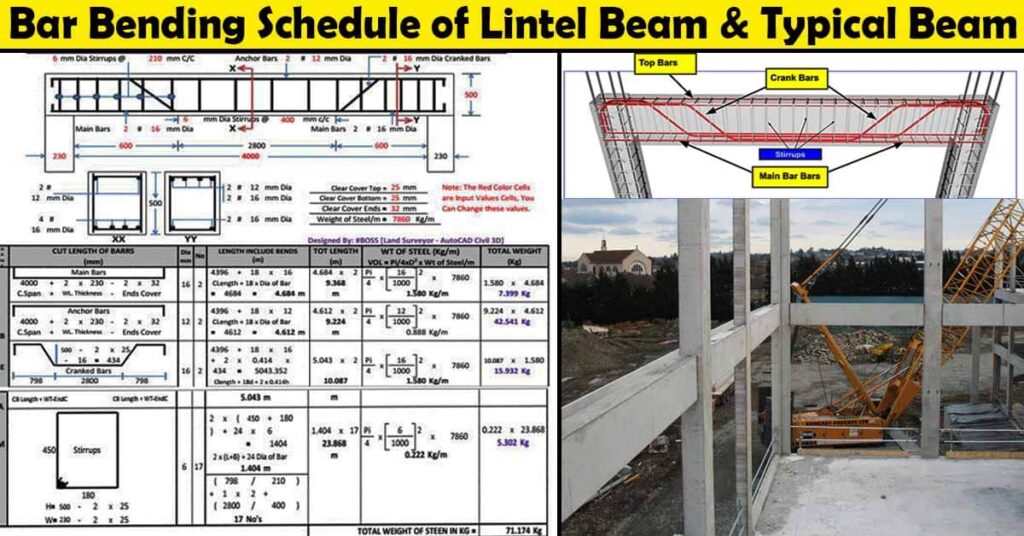
Learn how to calculate the weight of steel bars quickly & accurately. Our guide covers formulas (including D²/162), step-by-step examples, and a free reference chart for engineers & contractors.
No More Guesswork: How to Calculate the Weight of Steel Bars
In construction, steel is ordered by weight, not by length. Whether you’re preparing a bill of materials, estimating project costs, or checking deliveries on site, knowing how to accurately calculate the weight of steel bars (rebar) is a non-negotiable skill. An error can lead to massive cost overruns or dangerous project delays.
The good news? It’s a simple calculation once you know the magic formula. This guide will walk you through the most common methods, from the universal physics-based approach to the handy site-ready shortcut.

The Universal Formula: Weight = Density x Volume
This is the fundamental principle from which all other formulas are derived. It works for any shape—bars, plates, pipes, you name it.
- Weight of Steel Bar = Density of Steel x Volume of Bar
The density of steel is approximately 7850 kg/m³ (or 0.2836 lb/in³ for imperial calculations).
For a cylindrical steel bar (rebar), the volume is the cross-sectional area multiplied by the length.
- Volume of Bar = Cross-Sectional Area x Length
- Cross-Sectional Area (of a circle) = πr² or πD²/4
- π (Pi) ≈ 3.1416
- D = Diameter of the bar
Putting it all together:
Weight = (7850 kg/m³) x [ (π D²)/4 ] x Length
This is perfectly accurate, but using it on site with a calculator can be slow. This is where the simplified “derived” formulas come in.
The Site Engineer’s Best Friend: The D²/162 Formula
This is the most popular and convenient formula used in metric units. It’s a direct derivation from the universal formula, simplified for quick mental math.
Derivation of D²/162
- Weight = Density x Volume
- Weight = 7850 kg/m³ x (π D²/4) x Length
- Let’s get weight per meter: Assume Length = 1 m
- Weight/m = 7850 x (3.1416/4) x D² kg/m
- Weight/m = 7850 x 0.7854 x D² kg/m
- Weight/m = (6165.375) x D² kg/m …but this gives us D in meters.
- We use bar diameter in millimeters. So, D (mm) = D/1000 m.
- Weight/m = 6165.375 x (D/1000)²
- Weight/m = 6165.375 x (D² / 1,000,000)
- Weight/m = D² / (1,000,000 / 6165.375)
- Weight/m = D² / 162.2
Rounding it off gives us the golden formula:
Weight of Steel Bar per meter (in kg) = (D²) / 162
- Where D is the diameter of the bar in mm.
Step-by-Step Calculation with Examples
Let’s calculate the weight of a 12-meter long, 16mm diameter steel bar.
Method 1: Using D²/162
- Calculate Weight per Meter:
- Weight/m = (D²) / 162
- Weight/m = (16 x 16) / 162
- Weight/m = 256 / 162
- Weight/m = 1.580 kg/m
- Calculate Total Weight:
- Total Weight = Weight per meter x Total Length
- Total Weight = 1.580 kg/m x 12 m
- Total Weight = 18.96 kg
Method 2: Using the Universal Formula (for verification)
- Volume for 1m length:
- Volume = (π D²/4) x Length
- D = 16 mm = 0.016 m
- Volume = (3.1416 x (0.016)² / 4) x 1
- Volume = (3.1416 x 0.000256 / 4) x 1 = 0.000201 m³
- Weight for 1m length:
- Weight = Density x Volume
- Weight = 7850 kg/m³ x 0.000201 m³
- Weight = 1.579 kg (Very close to our D²/162 result!)
- Total Weight for 12m:
- Total Weight = 1.579 kg/m x 12 m = 18.948 kg
Handy Reference Chart for Common Bar Sizes
Print this out and stick it on your desk or site office wall!
| Bar Diameter (mm) | Weight per meter (kg/m) | Weight of 12m Bar (kg) |
|---|---|---|
| 8 | (8²)/162 ≈ 0.395 | 4.74 |
| 10 | (10²)/162 ≈ 0.617 | 7.41 |
| 12 | (12²)/162 ≈ 0.888 | 10.66 |
| 16 | (16²)/162 ≈ 1.580 | 18.96 |
| 20 | (20²)/162 ≈ 2.469 | 29.63 |
| 25 | (25²)/162 ≈ 3.858 | 46.30 |
| 32 | (32²)/162 ≈ 6.321 | 75.85 |
Note: Values are approximate and may vary slightly based on the actual density of the steel.
What about Imperial Units?
For those working with pounds, feet, and inches, the formula is similar.
Weight of Steel Bar per foot (in lb) = (D²) / 2.67
- Where D is the diameter of the bar in inches.
Example: Weight of a 1-foot long, #4 bar (D = 0.5 inches).
- Weight/ft = (0.5²) / 2.67 = (0.25) / 2.67 ≈ 0.094 lb/ft.
Why This Calculation is Crucial
- Accurate Cost Estimation: Steel is a major project cost. Knowing the exact weight allows for precise budgeting and prevents surprises.
- Ordering and Procurement: You order the correct tonnage from the supplier, avoiding excess waste or costly last-minute deliveries.
- Transport and Logistics: You can plan for the right trucks and equipment to handle the load.
- Structural Design Verification: Engineers use weights to calculate the dead load of a structure, ensuring it can support itself and the loads it will carry.
Pro Tip: Use a Standard Weight Chart
While knowing how to calculate is vital, for daily use, most engineers rely on standardized weight tables provided by steel manufacturers or codes like IS 1786, ASTM A615, or BS 4449. These account for minor variations in density and the raised ribs on rebar.
Conclusion: Master the Formula, Trust the Chart
Calculating the weight of steel bars boils down to a simple formula: D²/162 for metric. Understanding this principle empowers you to verify material quantities, control costs, and ensure project efficiency. Use the formula for quick checks and the standard charts for official documentation. Now you’re equipped to handle your steel with confidence