Eating healthy is often perceived as expensive, but it doesn’t have to be. With a little planning and smart shopping, you can enjoy nutritious meals without breaking the bank. Here’s a comprehensive guide to help you start eating healthy on a budget.
1. Plan Your Meals
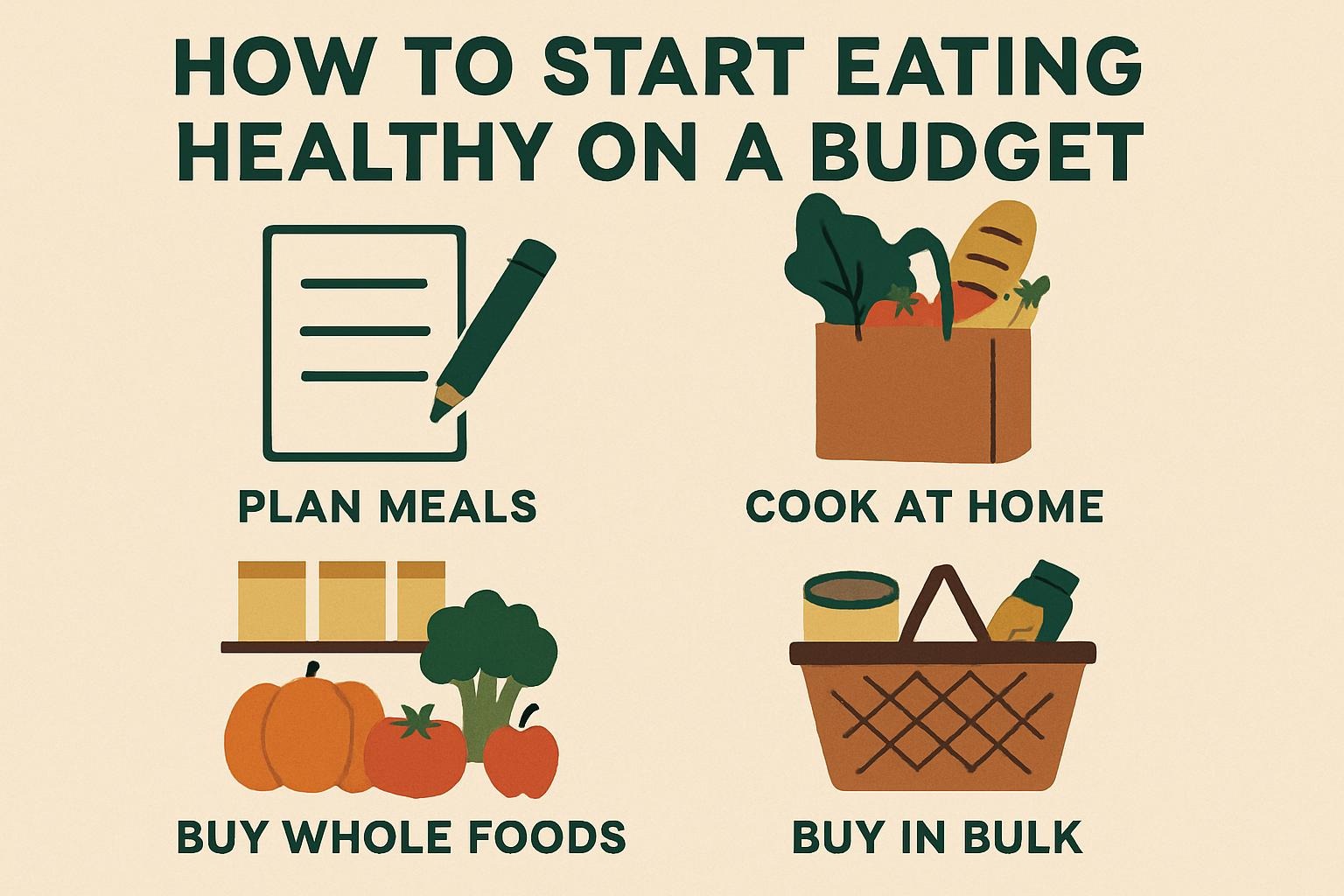
Meal planning is the foundation of eating healthy affordably. When you plan your meals for the week:
- You avoid impulse buys.
- You reduce food waste.
- You make efficient use of ingredients.
Start by choosing simple recipes that share common ingredients. This way, you can buy in bulk and use leftovers creatively.
2. Make a Shopping List and Stick to It
Before you head to the store, write down everything you need based on your meal plan. Stick to your list to avoid buying unnecessary items. This keeps your spending focused and helps you avoid impulse purchases.
3. Buy Whole, Unprocessed Foods
Processed foods can be more expensive and less healthy. Instead, focus on:
- Whole grains like brown rice, oats, and whole wheat pasta
- Fresh or frozen vegetables and fruits
- Beans, lentils, and other legumes
- Eggs and affordable cuts of meat or plant-based protein
Buying whole foods not only saves money but also provides better nutrition.
4. Shop Seasonally and Locally
Fruits and vegetables that are in season and grown locally are often cheaper and fresher. Visit farmer’s markets near closing time for discounts or check if your grocery store has weekly specials on seasonal produce.
5. Buy in Bulk When Possible
Items like rice, beans, oats, nuts, and seeds are often cheaper when bought in bulk. Store them properly in airtight containers to keep them fresh longer and reduce packaging waste.
6. Cook at Home More Often
Eating out or buying pre-packaged meals can quickly add up. Cooking at home allows you to control ingredients, portion sizes, and costs. Try to prepare meals in batches and freeze leftovers for busy days.
7. Use Affordable Protein Sources
Protein is important but can be pricey. Incorporate budget-friendly options such as:
- Eggs
- Canned tuna or salmon
- Beans and legumes
- Tofu
- Peanut butter
These options provide good nutrition without costing a lot.
8. Minimize Food Waste
Use all parts of your ingredients, store leftovers properly, and get creative with recipes to use up what you have. For example, vegetable scraps can be turned into broth, and ripe fruits can be used in smoothies or baking.
9. Drink Water
Cut back on sugary drinks and sodas. Water is free, hydrating, and essential for health. Flavor your water with slices of fruit or herbs if you want variety.
10. Educate Yourself
Learn basic cooking skills and nutrition information. There are many free resources online, including videos and blogs, that can help you become more confident in the kitchen and make healthier choices.
Sample Budget-Friendly Healthy Meal Ideas
- Breakfast: Overnight oats with banana and peanut butter
- Lunch: Lentil soup with whole grain bread
- Dinner: Stir-fried vegetables and tofu with brown rice
- Snacks: Carrot sticks with hummus, apple slices with peanut butter
Final Thoughts
Eating healthy on a budget is achievable with a little effort and planning. By focusing on whole foods, planning meals, and cooking at home, you can nourish your body without overspending. Start small, experiment with recipes, and enjoy the journey to better health and savings!