Concrete is one of the most widely used construction materials around the world. Its strength, durability, and versatility make it ideal for a variety of applications, from building foundations to highways. However, not all concrete is the same. Understanding concrete grades and mix ratios is crucial for ensuring that the right type of concrete is used for the right job. In this blog post, we’ll explore what concrete grades and mix ratios mean, why they matter, and how to choose the appropriate mix for your project.

What Are Concrete Grades?
Concrete grades refer to the classification of concrete based on its compressive strength, measured in megapascals (MPa) or pounds per square inch (psi). This strength indicates how much load the concrete can bear without failing. The grade is typically expressed as M followed by a number, such as M20, M25, M30, etc., where the number represents the compressive strength after 28 days of curing.
- M10, M15: Used for non-structural applications like pathways and flooring.
- M20: Commonly used for residential construction like slabs and beams.
- M25 and above: Suitable for structural elements like columns, beams, and foundations in commercial buildings.
Choosing the right grade ensures safety, durability, and cost-effectiveness.
What Are Concrete Mix Ratios?
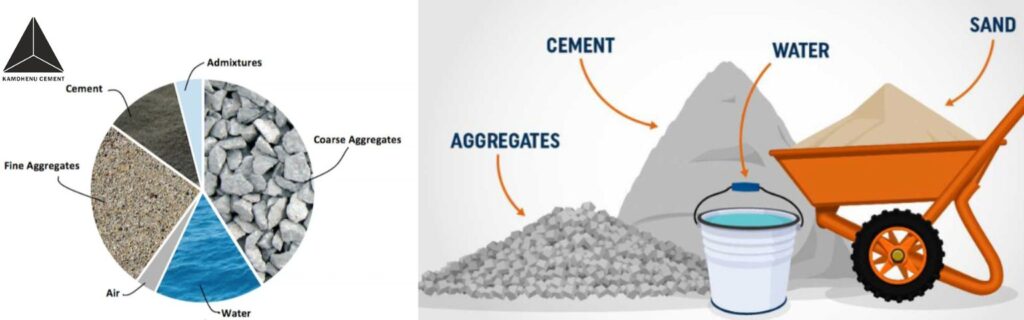
The concrete mix ratio refers to the proportion of cement, sand, aggregate (gravel or crushed stone), and water used to make concrete. These proportions affect the concrete’s strength, workability, and durability. The mix ratio is usually written in the form of Cement: Sand: Aggregate, for example, 1:2:4.
- Cement: The binding material that holds everything together.
- Sand: Fine aggregate that fills the voids between coarse aggregates.
- Aggregate: Coarse material like gravel or crushed stone that provides strength.
- Water: Activates the cement and allows the mix to be workable.
Common Mix Ratios for Different Grades
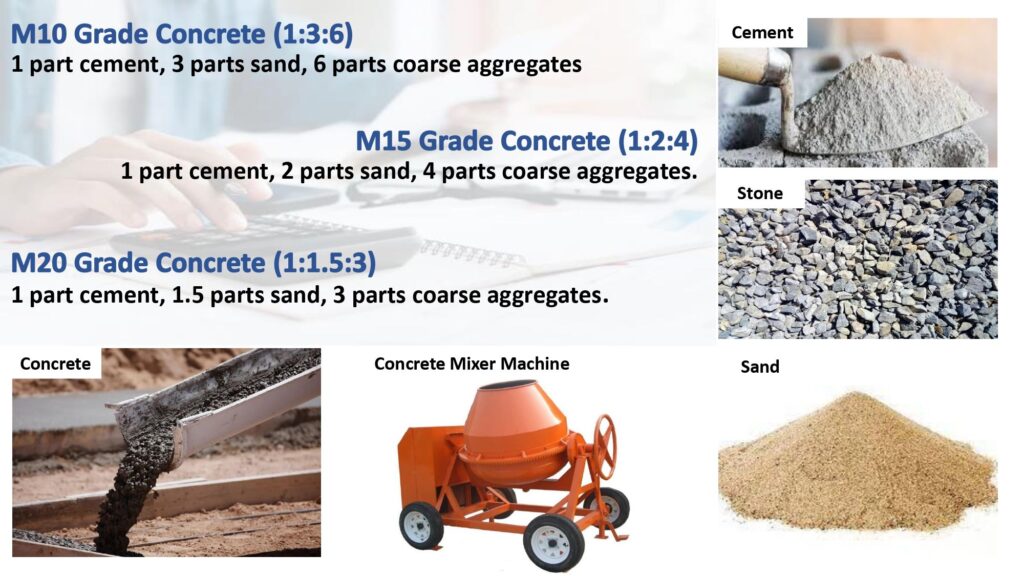
- M10 (1:3:6): Used for mass concrete works like foundations.
- M15 (1:2:4): Suitable for simple structural work.
- M20 (1:1.5:3): Common for reinforced concrete works.
- M25 (1:1:2): Used for high-strength concrete in structural applications.
Factors Influencing Mix Ratio Selection
- Strength Requirements: Higher strength requires a higher cement content.
- Workability: More water and fine aggregates improve workability but may reduce strength.
- Durability: Mix must resist environmental conditions like freeze-thaw cycles or chemical exposure.
- Cost: Balancing material costs with performance needs.
Tips for Mixing Concrete
- Always measure materials accurately.
- Use clean water and aggregates.
- Mix thoroughly to ensure uniformity.
- Avoid adding excess water to maintain strength.
- Cure concrete properly to achieve desired strength.
Conclusion
Understanding concrete grades and mix ratios is essential for any construction project. Selecting the appropriate grade and mix ratio ensures the concrete will perform as expected, providing safety, durability, and longevity. Whether you’re a professional builder or a DIY enthusiast, knowing these basics will help you make informed decisions and achieve better results in your concrete work.
Stay tuned for more construction tips and guides!