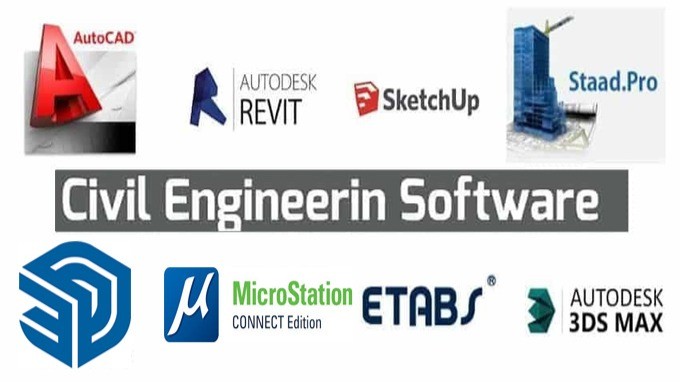
Civil engineering is a dynamic and complex field that requires precision, creativity, and technical expertise. One of the key tools that modern civil engineers rely on to design, analyze, and manage projects is specialized software. With the advancement of technology, software solutions have become indispensable in ensuring efficient project execution and accurate results. But what software do civil engineers use most? Let’s explore some of the most popular and essential software tools in the civil engineering industry.
- AutoCAD
AutoCAD by Autodesk is arguably the most widely used software in civil engineering. It is a powerful computer-aided design (CAD) software that allows engineers to create detailed 2D and 3D drawings of structures, roads, bridges, and more. AutoCAD’s versatility and extensive toolset make it ideal for drafting and designing, helping engineers visualize their projects before construction begins. - Civil 3D
Also developed by Autodesk, Civil 3D is tailored specifically for civil engineering design and documentation. It integrates well with AutoCAD and offers specialized tools for terrain modeling, road design, site grading, pipe networks, and corridor modeling. Civil 3D streamlines workflows, enabling engineers to work more efficiently on complex infrastructure projects. - STAAD.Pro
STAAD.Pro is a structural analysis and design software widely used by civil engineers for analyzing structures such as buildings, bridges, towers, and more. It supports various design codes and provides advanced analysis capabilities such as dynamic analysis, buckling, and nonlinear analysis. STAAD.Pro helps engineers ensure the safety and stability of their designs. - ETABS
ETABS is another popular structural engineering software focused on building analysis and design. It offers an integrated modeling environment and is particularly effective for high-rise buildings. With features like automatic load generation, seismic analysis, and detailed reporting, ETABS is favored for its user-friendly interface and robust capabilities. - Revit
Revit is a Building Information Modeling (BIM) software that has gained traction among civil engineers for its collaborative design approach. It allows multiple stakeholders to work on a single 3D model, improving coordination and reducing errors. Revit supports architectural, structural, and MEP (mechanical, electrical, plumbing) disciplines, making it a comprehensive tool for construction projects. - SAP2000
SAP2000 is a versatile structural analysis program used for the design and analysis of various types of structures. It offers intuitive modeling tools and supports complex analyses such as pushover and time-history analysis. SAP2000 is popular for bridges, dams, towers, and other civil infrastructure projects. - Microsoft Project
Effective project management is crucial in civil engineering. Microsoft Project is commonly used to plan, schedule, and track project progress. It helps engineers manage resources, timelines, and budgets, ensuring projects are completed on time and within scope. - GeoStudio
For geotechnical engineers, GeoStudio offers a suite of software tools for analyzing soil and rock behavior, slope stability, seepage, and thermal analyses. It aids in designing foundations, retaining walls, and earth structures safely and efficiently.
Conclusion
The range of software used by civil engineers reflects the diverse nature of the profession. From drafting and modeling to analysis and project management, these tools help engineers tackle complex challenges and deliver successful projects. Staying proficient in these software applications is essential for civil engineers looking to innovate and excel in their field.
Whether you are a student, a professional, or someone interested in civil engineering, familiarizing yourself with these software programs can provide a significant advantage. As technology continues to evolve, the integration of new tools and software will further enhance the capabilities and efficiency of civil engineers worldwide.