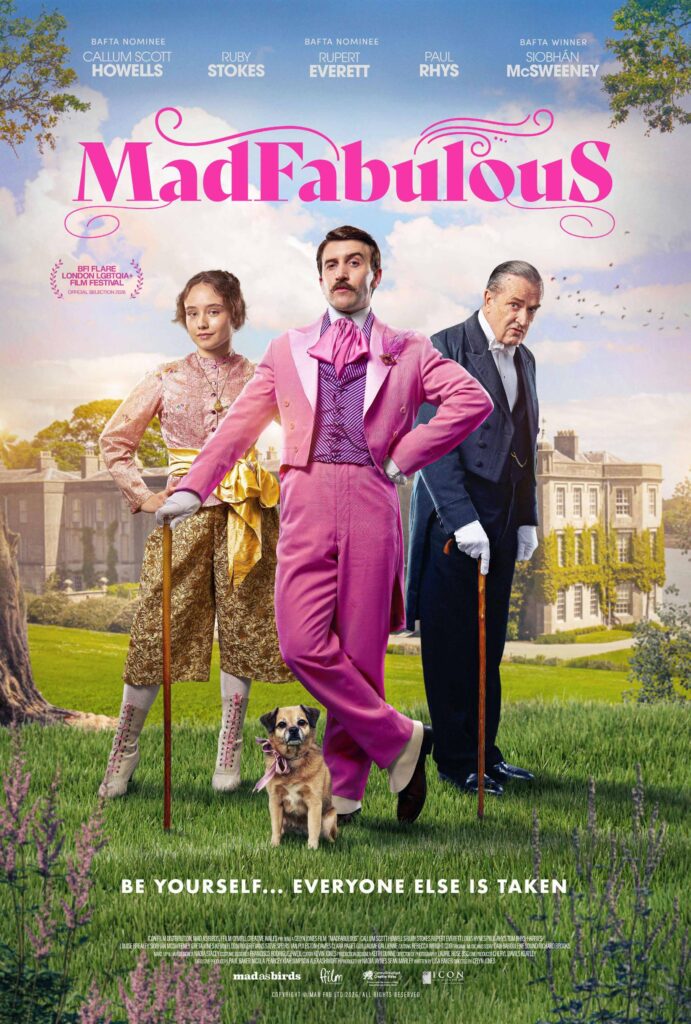
Madfabulous (2026) Review: A riotous, uncompromising celebration of otherness inspired by the unlikely British aristocrat who bankrupted his estate, lived fast and died young.
Introduction: The Bowie of the Victorian Era
Every generation believes it invented rebellion, gender-fluid fashion, and the concept of living for the applause. Yet, history holds mirrors that prove otherwise. Enter Madfabulous (2026), a colorful, defiant, and deeply empathetic British period feature that strips the starch out of late-19th-century costume dramas.
Directed by Celyn Jones (The Almond and the Seahorse) and written by debut screenwriter Lisa Baker, the film tells the extraordinary true story of Henry Cyril Paget, the 5th Marquess of Anglesey. Dubbed “The Dancing Marquess,” Paget was a flamboyant aristocrat who blew a multi-million-pound fortune on silk dresses, theatrical productions, and custom perfumes, changing high society forever before his tragic death at age 29.
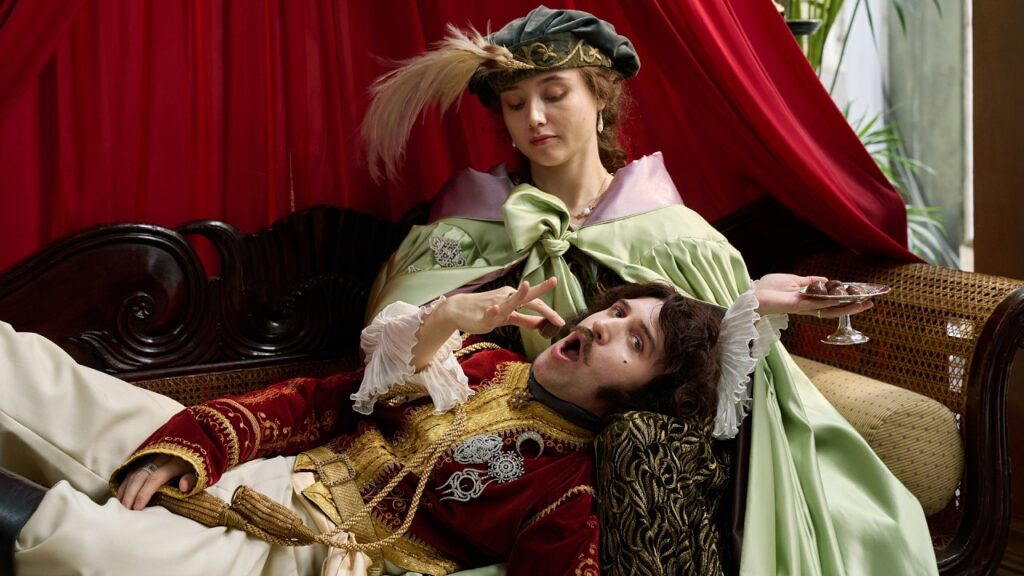
Rather than treating its subject as an oddity or a cautionary tale of upper-class ruin, Madfabulous frames his life as a revolutionary act of self-expression. The result is an uncompromising celebration of otherness that feels thoroughly modern, fiercely joyful, and ultimately heartbreaking.
The Plot: Glamour, Gilded Halls, and Bankruptcy
The film follows the young, eccentric Henry Paget (Callum Scott Howells) as he arrives from France to North Wales to claim his massive family inheritance. Instantly, his theatrical flair and total disregard for aristocratic protocol send massive shockwaves through the conservative local elite.
[Inherits Gilded Fortune] ──> [Transforms Estate to Theater] ──> [Fierce Societal Backlash] ──> [Tragic, Brilliant Legacy]
 (Henry Claims Title)           (Blazes Flamboyant Trail)         (Bankruptcy & Betrayal)        (Dying Young at 29)
Instead of managing his estate or marrying for political alliances, Henry transforms the family chapel into a 150-seat theater. He spends a massive fortune on world-class touring companies, glittering wardrobe changes, and avant-garde dance routines. Flanked by his gentle, wise butler Gelert (Rupert Everett) and his chaotic first cousin Lily (Ruby Stokes), Henry wages a glittering war against the rigid expectations of his name. However, as the bills pile up and an intolerant establishment begins conspiring to strip him of his freedom, Henry is forced to face the real-world cost of living entirely as oneself.
Thematic Analysis: Redefining Heritage and Rebellion
Madfabulous thrives by shifting the focus away from traditional estate politics and positioning personal identity as the ultimate battlefield. Lisa Baker’s screenplay masterfully highlights the deep contrast between the gray, stifling conservatism of late-Victorian society and the brilliant, fluid world Henry creates within his castle walls.
Key Satirical and Cultural Targets
- The Performance of Identity: The movie explores how high society performs a rigid version of class and gender, treating Henry’s genuine love for theater and cross-dressing as madness rather than artistry.
- The Cruelty of the Elite: While the local working-class townspeople find joy in Henry’s generosity and art, his aristocratic peers view his spending as an existential threat to their legacy, leading to backstabbing legal maneuvers.
- The Shadow of Oscar Wilde: Set in the shadow of Oscar Wilde’s real-world imprisonment for “gross indecency,” the movie highlights the constant danger lurking beneath Henry’s bright, fabulous existence.
Performance Review: A Changing of the Queer Cinema Guard
The emotional heart of the film relies completely on its cast, who balance wild eccentricity with immense vulnerability.
| Actor | Character | Core Contribution to the Film |
| Callum Scott Howells | Henry Paget | Howells (It’s a Sin) delivers a definitive, star-making performance. He plays Henry with boundless charm and energy during his creative highs, yet strips away the armor to show the agonizing loneliness of a man born a century too early. |
| Rupert Everett | Gelert | Everett offers a masterful performance as Henry’s loyal butler. Acting as a calm anchor in a sea of chaos, his quiet warmth and late-stage words of wisdom feel like a beautifully symbolic passing of the torch within queer cinema. |
| Ruby Stokes | Lily | Stokes (Bridgerton) acts as a stellar comedic and emotional foil to Henry. Her Lily is fiercely protective, fiercely independent, and unafraid to challenge Paget’s most reckless financial impulses out of pure love. |
The supporting cast features standout appearances by Siobhán McSweeney as the theatrical Blanche and Paul Rhys as the stern Lord Penrhyn, adding fantastic texture to an already stellar ensemble.
Direction and Visual Style: A Velvet Revolution
Director Celyn Jones alongside Director of Photography Laurie Rose turn the gorgeous landscapes of Anglesey and Caernarfon into a living, breathing canvas. The film deliberately avoids the flat, desaturated look of many modern period dramas. Instead, it bursts with deep burgundy, shimmering golds, and rich silks.
A standout sequence features Henry performing his famous “butterfly dance” in a voluminous white silk dress. The camera tracks his movements with complete reverence, elevating the dance from a eccentric hobby to a profound statement of absolute freedom. Costume designer Francisco Rodriguez-Weil deserves immense praise for recreating Paget’s iconic, androgynous wardrobe with stunning historical accuracy and artistic imagination.
The Verdict: A Must-Watch Antidote to Boring Period Dramas
The Bottom Line: Madfabulous is a glorious, defiant triumph. It stands out as a glittering jewel in the 2026 cinematic landscape, honoring a forgotten pioneer of fluid identity without ever compromising on its emotional weight.
While the film charts a steady course toward an inevitably tragic end, it refuses to let sadness dictate the narrative rhythm. It chooses instead to focus entirely on the warmth, generosity, and unadulterated sparkle of its main subject. Guided by Callum Scott Howells’ magnetic lead performance and a beautifully understated turn from Rupert Everett, Madfabulous doesn’t just ask us to look back at history—it commands us to dance right along with it.