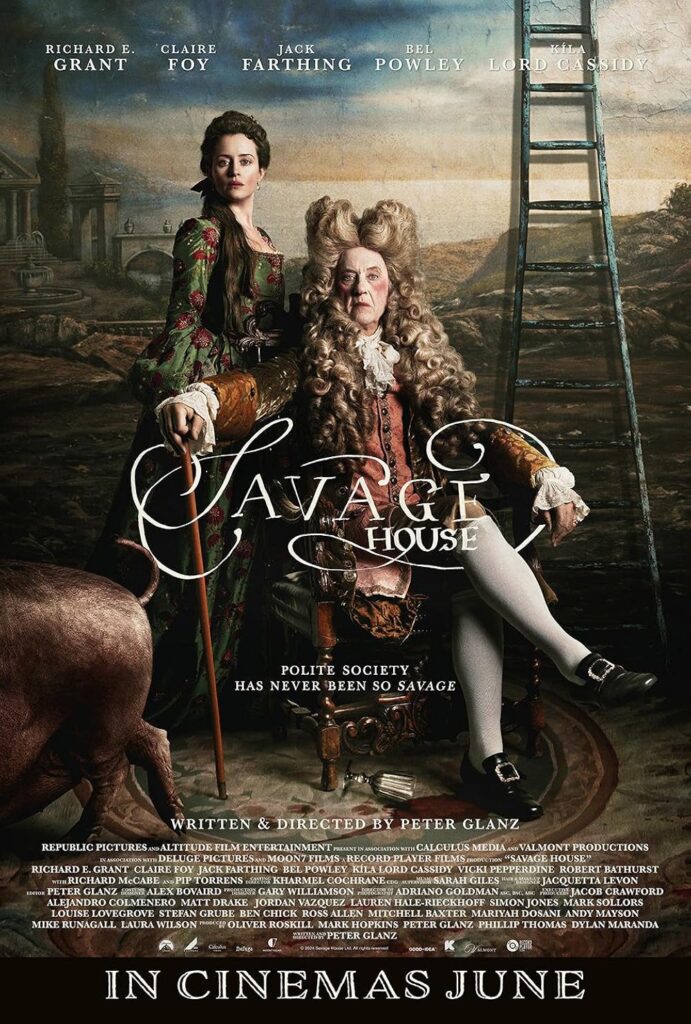
Savage House (2026) Review: Set in 18th century England during pox outbreak and Jacobite uprising, Sir Chauncey and Lady Savage blindly pursue better life. Their pursuit filled with ironic decadence and bloodshed. A darkly satirical play on class and power.
Introduction: The Anti-Bridgerton Has Arrived
For anyone suffering from period-drama fatigue brought on by years of polite ballroom dances and sanitized historical romances, writer-director Peter Glanz has provided the perfect antidote. Savage House (2026) is a razor-sharp, fiercely irreverent British black comedy that strips away the romanticism of the Georgian era to expose the grotesque, violent machinations of social climbing.
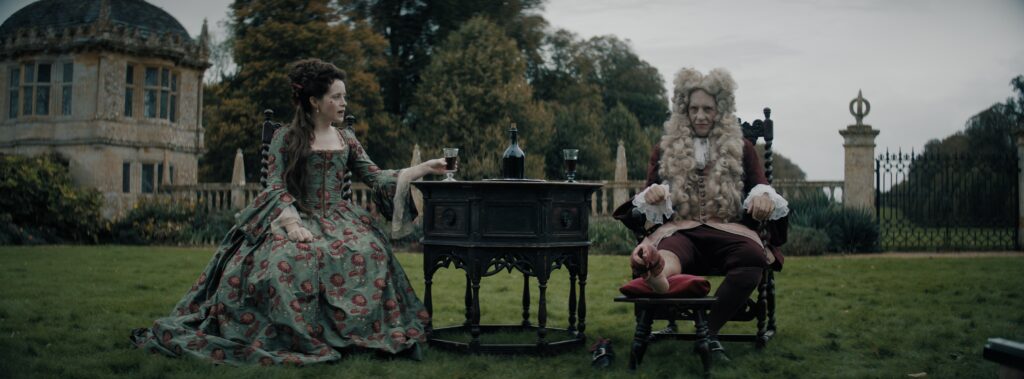
Set in 18th-century England against the dual backdrop of a devastating smallpox epidemic and the political chaos of the Jacobite Uprising, the film tracks the unscrupulous elite as they literally and figuratively step over bodies to secure power. Led by powerhouse performances from Richard E. Grant and Claire Foy, Savage House is a beautifully styled, blood-soaked playground that subverts the traditional costume drama into an unforgettable satirical nightmare.
The Plot: Ambition Amidst the Pox and Progress
The narrative engine of Savage House is fueled entirely by blind, unadulterated ambition. While the outside world burns with war and disease, Sir Chauncey Savage (Richard E. Grant) and his calculating wife, Lady Savage (Claire Foy), are laser-focused on a singular goal: hosting a flawless, career-defining dinner party for a visiting Duke and Duchess.
[National Catastrophe] ──> [Blind Elite Ambition] ──> [Ironic Decadence] ──> [Bloody Collapse]
 (Pox & Jacobites)           (Sir Chauncey & Lady Savage)     (The Dinner Party)          (The Satirical Climax)
As Sir Chauncey and Lady Savage blindly pursue a better life, their estate becomes a pressure cooker of ironic decadence and bloodshed. Every attempt to project an image of effortless high society is derailed by escalating horrors—ranging from infected staff members collapsing mid-service to local political rebels closing in on their gates. Rather than pivoting to handle these crises with grace, the Savages double down on their vanity, leading to an escalating series of absurd, macabre set pieces.
Themes: A Critical Play on Class, Power, and Survival
Glanz’s screenplay acts as a deeply cynical play on class and power. By contrasting the extreme refinement of the aristocracy with the visceral, muddy reality of a national health crisis and a military rebellion, the film underscores a timeless truth: the ruling class is frequently insulated by its own delusions.
Core Satirical Targets in Savage House
- The Performance of Nobility: The film brilliantly mocks the elaborate etiquette and visual performativity required to maintain status, treating manners as a literal mask for cruelty.
- The Disposable Lower Class: Servants and commoners are treated with a hilarious yet tragic level of indifference, viewed merely as inconveniences when they drop dead from the pox during a meal.
- Insular Wealth: While the Jacobite Uprising threatens the very foundations of the state, Sir Chauncey is far more concerned with the quality of his imported wine and the seating arrangements at his table.
Performance Review: Grant and Foy Are Perfectly Monstruous
The success of a film this deeply cynical relies entirely on the charisma of its leads, and Glanz’s casting choices are nothing short of inspired.
| Actor | Character | Comedic and Dramatic Impact |
| Richard E. Grant | Sir Chauncey Savage | Grant channels the manic, aristocratic desperation that made him an indie icon. His Sir Chauncey is a gloriously unhinged social climber, balancing a fragile ego with a terrifying capacity for cold indifference. |
| Claire Foy | Lady Savage | Foy provides the perfect icy counterweight to Grant’s chaotic energy. Playing against her traditional “regal” typecasting, she portrays Lady Savage with a razor-sharp mind and a calculated ruthlessness that anchors the film’s darkest punchlines. |
The supporting cast, including Jack Farthing as the smug Reginald Halifax and Bel Powley as Dorothy Neville, rounds out a stellar ensemble of characters you will absolutely love to hate. Each actor leans completely into the grotesque nature of their roles, ensuring that no one on screen emerges with their morality intact.
Production Design and Cinematography: Gorgeous Destruction
Visually, Savage House is a feast. Director of Photography Adriano Goldman crafts an aesthetic that directly mimics the candlelit, painterly beauty of classic period films like Stanley Kubrick’s Barry Lyndon. The opulence of the Savage estate is rendered in stunning detail, making the gradual intrusion of blood, mud, and disease look exceptionally jarring.
Production designer Gary Williamson and costume designer Alex Bovaird deserve immense credit for creating a world that feels incredibly lived-in. The juxtaposition of immaculate, towering powdered wigs and lavish silk gowns against the pustules of smallpox and the grime of the battlefield creates a striking visual irony that perfectly mirrors the script’s thematic goals.
The Verdict: A Wicked, Masterful Crowd-Pleaser
The Bottom Line: Savage House is a triumphant, uncompromisingly dark historical satire that succeeds on every level. Peter Glanz has constructed an elegant, blood-spattered mirror that reflects the absolute worst of human nature, wrapping it in the velvet packaging of an elite British costume drama.
It is a film that refuses to offer easy moral comforting, opting instead to let its characters sink entirely into the quicksand of their own making. Powered by career-best comedic performances from Richard E. Grant and Claire Foy, it stands as one of the most distinctive and bitingly funny films of 2026. If you enjoy your historical dramas served with a heavy dose of pitch-black humor, Savage House is an absolute must-watch.